3D walkthroughs
Day and night light in a 3D walkthrough: why light sells a home
In short: A 3D walkthrough with day and night light shows the same unit at different times, so buyers see how much light comes in, how the rooms change and what the place feels like after dark. It turns orientation, which on a plan is just an arrow, into something they can see and value.
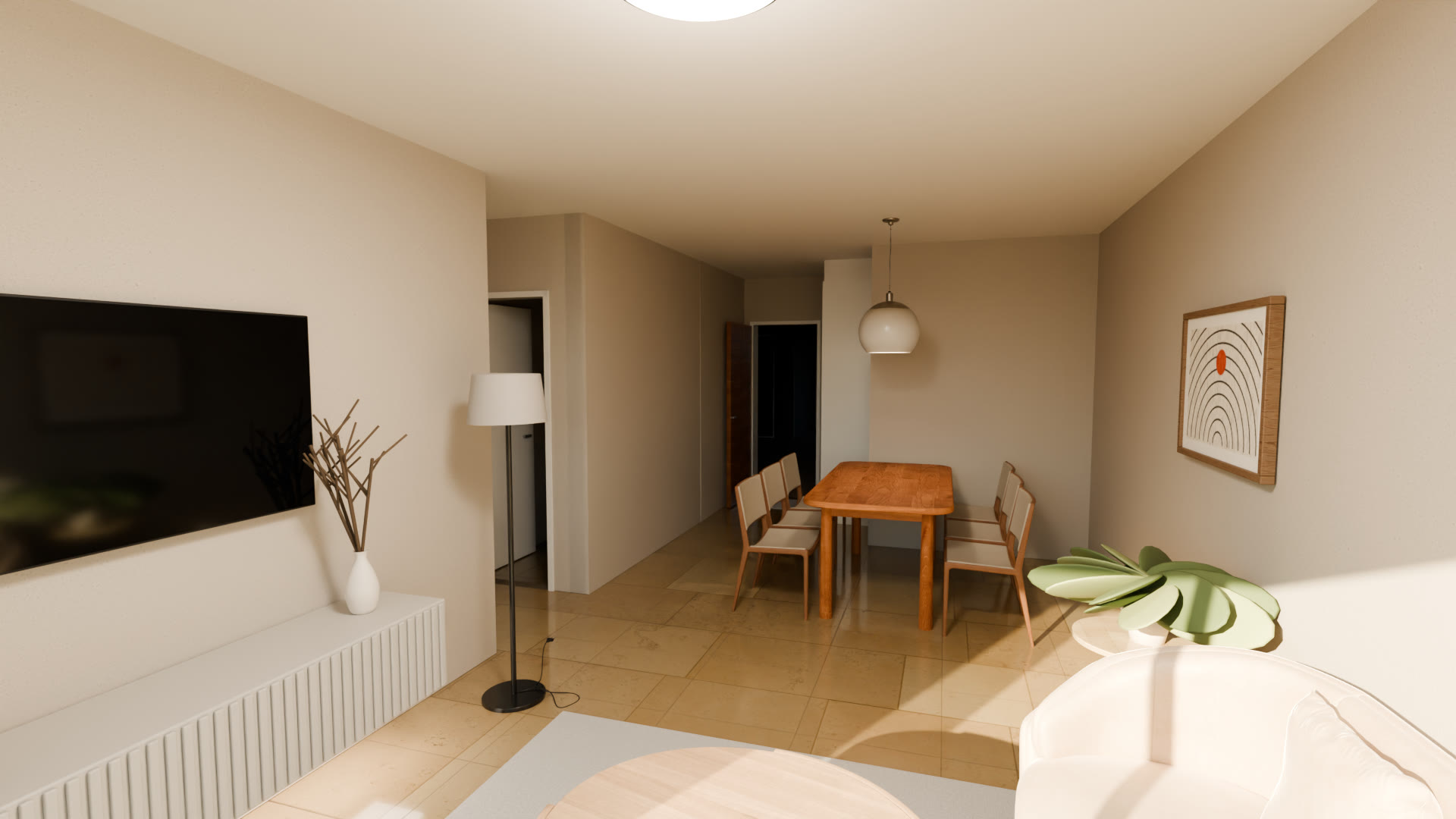
A 3D walkthrough with day and night light lets buyers see the same home in the morning, in the afternoon and at night. They see where the sun comes in, how the living room changes through the day and what the place looks like with the lights on. It answers one of the questions every buyer asks, and one of the hardest to answer before a building exists: does it get good light?
The question that always comes up: does it get light?
Ask any salesperson. Sooner or later, almost every buyer asks about light. They ask which way the unit faces, whether the living room gets sun, whether the bedroom is dark. It's a fair question: light changes how a home feels more than almost anything else, and it's one of the few things you can't fix after you move in.
On a plan, the answer is a small arrow pointing north. Most buyers don't know what to do with it. Even those who do have trouble translating it into "the kitchen gets morning sun and the living room gets the afternoon." So they ask the salesperson, who answers in words, and the buyer still has to imagine it.
A walkthrough with different times of day shows it. The buyer walks into the living room and sees the afternoon sun across the floor. That's an answer they don't need to imagine.
What changes between morning, afternoon and night?
Each time of day tells a different part of the story:
- Morning. Which rooms wake up with light. For many buyers, a bright kitchen or bedroom in the morning matters a lot, especially families with a daily routine.
- Afternoon. The warm light, usually the most attractive. It's when the living room and the balcony look their best, and when buyers picture coming home from work.
- Night. The home with the lights on, the view of the city or the garden lit up. It shows what the place feels like at the hour people actually spend the most time at home.
Seeing all three, buyers understand the home as something lived in through the whole day, not a single perfect photo.
Light as a selling point for each unit
Light also helps sell units that might be harder to place. A unit facing away from the street may get less traffic noise and a quiet garden view. A lower floor may get shade in summer that a buyer in a hot climate will value. Showing each unit with its real light lets you make those arguments honestly, instead of avoiding the question.
And on the other side, the unit with great light should get credit for it. If it's the corner unit flooded with afternoon sun, that's part of why it costs more. Seeing it helps defend the price. I cover this in defending your price and raising the average ticket.
Night: the image that gets shared most
Night views have a particular pull. A building lit up against a dark blue sky, a living room glowing at dusk, a terrace with string lights. They're the images people stop on when they scroll and the ones they forward.
They're also useful beyond social media: on the website, in a presentation to investors, in the brochure as a contrast to the daytime views. There's more on this in night and twilight renderings.
How it looks in the demo
The Americana 35.64 house demo, an unofficial working demo based on a model by Viviendas Roca, shows the idea: the floor plan rises into the house, and you walk through it by scrolling, with morning, afternoon and evening light. Same house, same furniture, three different moods. It works on a phone with nothing to install.
For buildings, the Maconda XXIV building demo, an unofficial working demo based on a 12-story building in Quilmes, near Buenos Aires, marketed by Otamendi Propiedades, shows the building on its real block, the floors and the units, with the walkthrough of each apartment. The format itself is explained in 3D virtual tours of apartments.
Which projects benefit most?
- Homes and houses, where buyers care a lot about the garden, the porch and the sun in the living areas.
- Buildings with different orientations, where light is one of the main differences between units of the same type.
- Projects with a strong view, such as a park, the water or the city skyline, which looks completely different at night.
- Vacation and weekend homes, where sunsets and evenings outside are part of what's being bought. See renderings for country homes.
I work remotely from Buenos Aires, Argentina (UTC−3). You send the plans, the exact location and the north on the plan, approve the views by message or video call, and get the walkthrough by link, ready to share. If you want to see your project with its light through the day, message me on WhatsApp at +54 9 11 6193-3176 or email facundocampo100@gmail.com. I answer in English and Spanish.
Frequently asked questions
Is the light in the walkthrough the real light for that site?
It's shown according to the project's orientation on its site, so the light at each time of day is consistent with what buyers will experience. That's why it's important to send the exact location and the north on the plan.
Does every room need to be shown at all three times?
No. It's usually enough to show the main spaces, like the living room, the kitchen and the outdoor areas, at the times when they look best or when buyers ask most. The goal is to answer the light question, not to multiply views.
Is the night view useful beyond social media?
Yes. It works on the website, in investor presentations, on the site sign and in the brochure. It shows a side of the project that daytime images can't.
Does it look as good on a phone?
Yes. The walkthrough opens in the phone's browser, and that's where most buyers will see it, so it's made to look right there.