Markets
Selling to foreign buyers who will never visit the site
In short: A foreign buyer who will never visit the site only has the screen to decide with. To sell to them, the developer has to replace everything a visit provides: walking through the home, understanding the neighborhood, meeting the seller and trusting that the project is real.
To sell a development to foreign buyers who will never set foot on the site, you have to replace everything a visit gives them: seeing the home, understanding the neighborhood, meeting the people selling it and trusting that the project is real. A local buyer has many ways to get that. A foreign buyer only has the screen. If what they see there answers their questions, they buy. If it doesn't, they keep looking at other projects.
How is this different from a buyer in another city?
A buyer from another city in the same country is far away, but they share a lot with you: the language, the currency, the legal system, the names of the neighborhoods, and they can usually travel if they really need to. There's a separate article on selling to buyers who don't live nearby.
A foreign buyer is missing all of that at once. They may not know which neighborhoods are considered good. They don't know your company or the local brands. They may not read the language of your brochure. The paperwork is unfamiliar. And a trip is a big decision, sometimes one they'll never make.
That changes the job. It's not just about showing the home from far away. It's about building, step by step, the trust that a local buyer gets without thinking about it.
Step 1: let them walk through their home without traveling
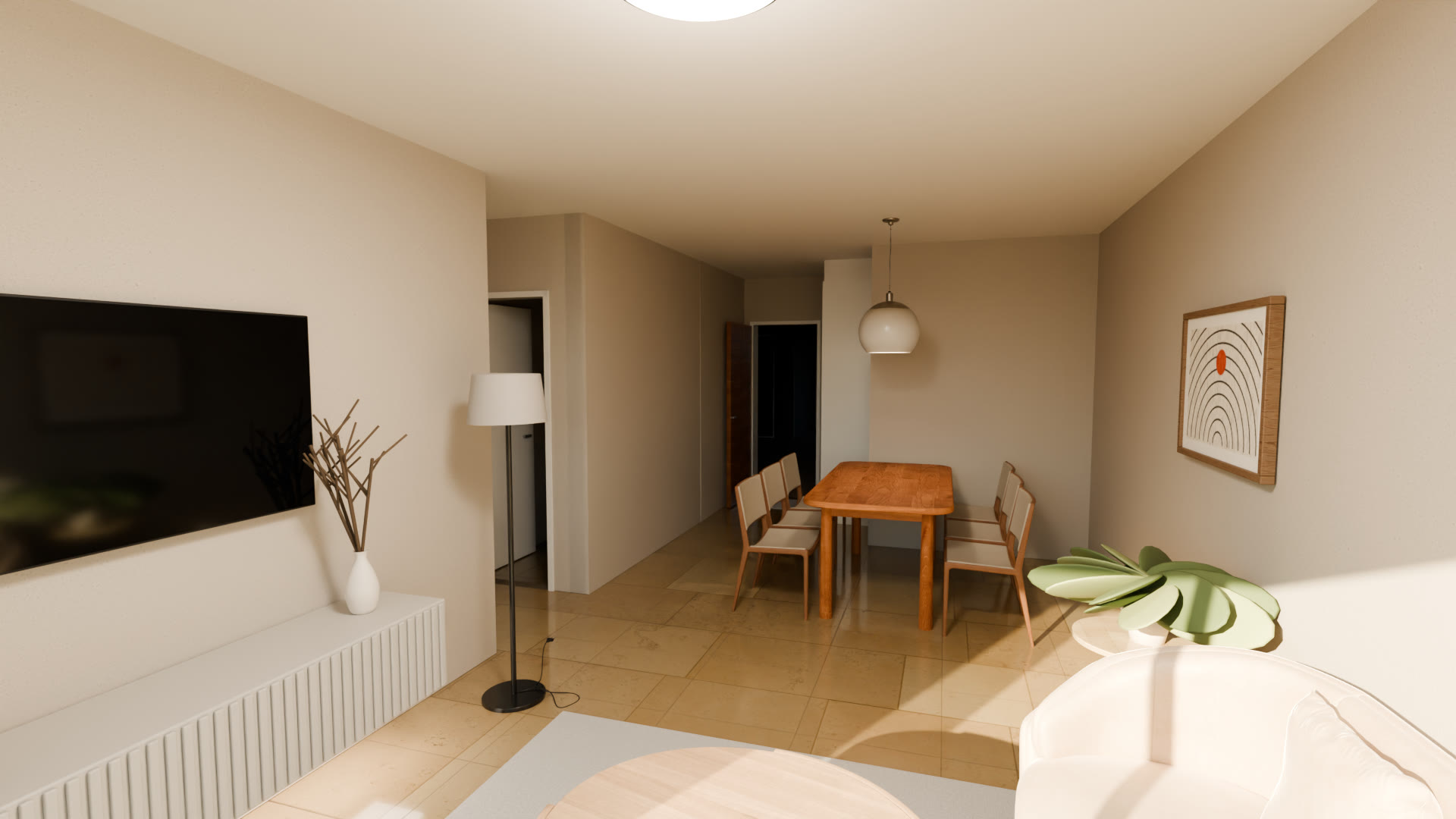
The first thing a foreign buyer needs is to understand the home: its size, its layout, its light, what's delivered. Renderings help, but they show angles chosen by the seller. A walkthrough lets the buyer go where they want and look at what worries them.
That matters even more when there's a language gap. A floor plan with labels in a language they don't read is hard to follow. A walkthrough barely needs words: the buyer walks into the kitchen and sees the kitchen. There's more on this in 3D virtual tours for apartments.
Step 2: show them the neighborhood, not just the building
A building rendered on a white background tells a foreign buyer nothing about where they're buying. And the neighborhood is often what worries them most, because they have no way of checking it.
The material should show the building on its real block, with the real neighbors, the street and what's nearby. If there's a park, a beach, a metro station or a shopping street close by, it can be shown, without inventing anything that isn't there. That honesty is itself a trust signal. More in exterior renderings and aerial renderings.
Step 3: give them trust signals from a distance
A foreign buyer can't walk into your office or see your previous buildings. They have to judge you by what they find online. A few things help:
- Material that's well made and consistent. A sloppy brochure makes people wonder what else is sloppy.
- Clear information about what's delivered, with the finishes shown matching the specification.
- Your previous projects, with photos of finished buildings, if you have them.
- A website that works in their language, or at least in English.
- Updated availability, so they know which units are really still free. See the interactive unit selector.
- Progress updates once construction starts, so they can see the building going up. More in construction progress and renderings.
None of these is spectacular on its own. Together, they tell the buyer there's a serious company behind the project.
Step 4: the video call
For a foreign buyer, the video call is the sales gallery. It's where they meet the person selling, ask their questions and decide whether they trust them.
The walkthrough changes what happens on that call. Instead of describing the unit, the salesperson shares the screen and walks through it together with the buyer, stopping where the buyer wants to stop. The buyer asks "how big is that terrace?" while looking at it. The conversation becomes concrete. There are more ideas in sales meetings over video call.
Step 5: the legal side, with a professional
Buying property abroad comes with paperwork that varies a lot by country: identification numbers, how payments are made, what guarantees exist during construction, taxes. That isn't something the sales material should explain or promise. Point the buyer to a local lawyer or advisor and let them handle it.
What the material can do is make sure that when the buyer gets to that stage, they already know exactly what they're signing for.
Language and time zones
Two practical details make a big difference with foreign buyers:
- Language. The core material should work without words, and the texts around it should be available in the languages your buyers speak. At a minimum, English.
- Time zones. Answer when they're awake. A buyer who writes at night their time and gets an answer while they're still online is much more likely to keep going than one who waits until the next day.
What I do in all this
I make the renderings, walkthroughs and availability views that cover steps 1 to 4: the home, the building in its surroundings, the material your sales team uses on video calls and the link your buyers share with their families. I work remotely from Buenos Aires, Argentina (UTC−3), with plans sent by email, approvals over video call and deliveries by link, in English and Spanish. If you sell to buyers abroad, message me on WhatsApp at +54 9 11 6193-3176 or email facundocampo100@gmail.com.
Frequently asked questions
Will a foreign buyer buy without visiting the site?
Many do, as long as they can clearly see the home, the neighborhood and who's behind the project. A walkthrough, an honest view of the surroundings and a good video call cover most of what a visit would.
Does a 3D walkthrough work across languages?
Yes. It barely uses words: the buyer walks through the home and understands it. Labels and the texts around it can be in whichever languages your buyers speak.
How do I build trust if my company isn't known abroad?
With consistent, well-made material, clear information about what's delivered, updated availability and, once building starts, regular progress updates. Each one is small; together they show a serious company.
Can the buyer view it on their phone?
Yes. It's a link that opens in the browser on any phone or computer, from any country, with nothing to install.