Sales & pre-construction
How to sell an apartment over a video call, step by step
In short: A video sales call works when the agent and the buyer walk through the unit together on a shared screen and talk about what they're both seeing. It replaces the trip to the sales office and lets a partner or family member join from wherever they are.
You can sell an apartment over a video call when the agent and the buyer walk through the unit together on a shared screen and talk about what they're both looking at. For buyers who live far away, work long hours or need someone else in on the decision, the call replaces the visit to the sales office. What makes it work isn't the platform. It's having something worth showing and a clear order for the meeting.
Why video calls became a normal sales meeting
Not long ago, the meeting that mattered happened at the sales office or in the model unit. Today, plenty of buyers would rather not travel for the first conversation, for familiar reasons:
- They live in another city or country. The investor from another region, the expat buying back home, the parent buying for a kid who's moving away for college.
- They don't have time. Going to the sales office takes half a day; a video call takes a few minutes over lunch.
- The decision involves several people. The partner is at work, the parent helping with the deposit lives somewhere else, the business partner is traveling.
For the developer or brokerage, there's an upside too: one agent can run several meetings a day without leaving the desk, and talk to prospects who would never make it to the office.
The problem with a video call and nothing to show
A call where the agent shares a PDF floor plan and talks through it from memory is dull and doesn't persuade. The buyer squints at a plan on a small screen, can't make sense of the dimensions and ends with "I'll look at it with my partner and get back to you."
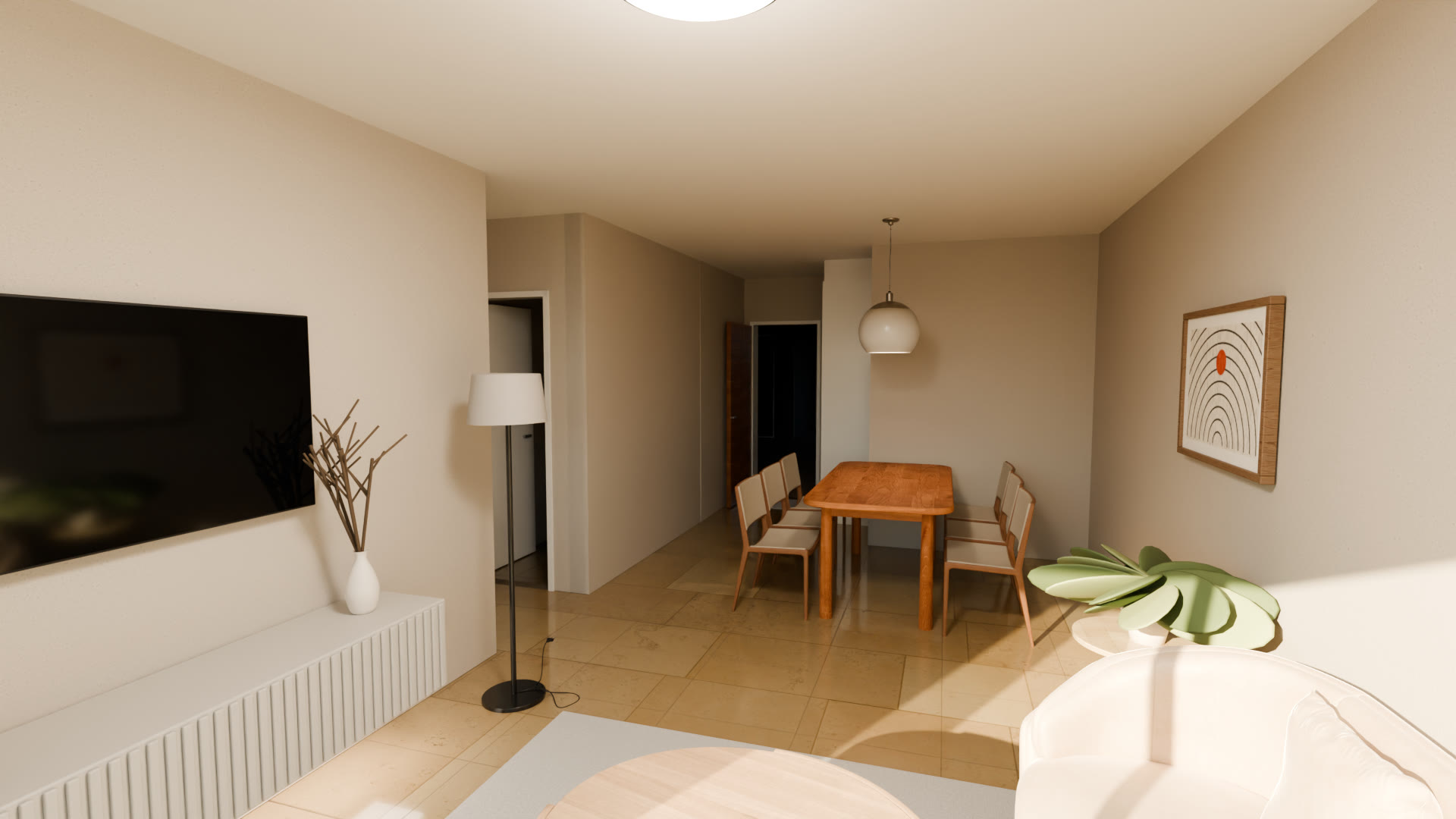
What changes the meeting is being able to walk through the unit live. The agent shares the screen, opens the building, taps the floor, steps into the apartment and moves through it while the buyer asks: "Go back to the kitchen," "What's out that window?", "What does it look like at night?" The conversation shifts from explaining to looking at something together.
You can see what that would feel like in the Maconda XXIV building demo, an unofficial working demo based on a 12-story building in Quilmes, near Buenos Aires, marketed by Otamendi Propiedades, or, for a house, in the Americana 35.64 house demo, based on a Viviendas Roca model.
How to prepare the meeting
A good video sales call starts before anyone joins:
- Know what the buyer wants. Bedrooms, use (to live in or to rent out), rough budget, who else decides. Ask over chat before you book the call.
- Pick two or three units to show. Not the whole building, just the ones that fit best.
- Send the link ahead of time. So they can open it and look around alone. If they've already walked through it, they arrive with questions.
- Invite the decision-makers. "Would your partner like to join?" is a question that speeds things up.
- Test screen sharing. Make sure the walkthrough runs smoothly on the agent's computer, on a good connection.
A simple order for the call
There's no single script, but this order usually works:
- Context in two minutes. The building on its street, the location, the developer. Just enough to orient the buyer.
- The unit that fits best. Walk it from the front door to the balcony, slowly, letting them ask.
- The light. Show the same room in the morning, afternoon and evening. Buyers always wonder about it and almost never ask.
- Alternatives. The same unit type on another floor, or a different layout if something didn't sit right.
- Availability and terms. What's left, payment terms in general, how to reserve.
- A next step with a date. A second call with the family, a site visit, the reservation. Never end on "just let me know."
Hand the buyer the controls
One detail makes a big difference: at some point, ask the buyer to open the link on their own phone and move through it themselves. When buyers drive, they look at what matters to them, stop where they want and start making the apartment theirs. They're no longer watching a presentation. They're deciding where the bed goes.
And once the call ends, the link is still on their phone. They'll open it again that night, alone or with whoever couldn't make the call.
Objections get answered by showing
The same doubts come up on a call as at the office, with one advantage: you can answer them on the spot, by showing.
- "Isn't the living room small?" Walk through it furnished and show the table for six.
- "Does the rear unit get any light?" Show it in afternoon light.
- "Is the kitchen closed off?" Step in and show how it connects to the living room.
I go into this in detail in pre-construction buyer objections.
And after the call?
What's said in a meeting gets forgotten; what's sent in writing stays. The same day, send a short message with links to the units you looked at, anything you still owe them an answer on, and the next step you agreed. There's a sequence for the following days in following up on real estate leads, and more on buyers who will never set foot in the office in selling to remote investors and buyers.
For your sales team
Video calls take some practice: talking to the camera, not rushing through the walkthrough, leaving pauses so the buyer can ask. It's worth having the team rehearse with each other using the project material before the first real meeting. More on that in training your sales team to sell off-plan.
That's how I work too: video calls from Buenos Aires (UTC−3), material approved through a link, and contact over WhatsApp or email, in English or Spanish. If you want a walkthrough of your project to show in these meetings, message me at +54 9 11 6193-3176 or write to facundocampo100@gmail.com.
Frequently asked questions
Which platform should I use for the call?
Whatever the buyer already has and knows how to use. Some people prefer a WhatsApp or FaceTime call; others, a meeting link that opens in the browser. What matters is that the agent can share the screen and the buyer doesn't have to install anything.
Can someone reserve a unit without visiting it?
Many buyers do, especially investors and people who live far away. Reservation terms and paperwork depend on each developer and on local rules, so check them with a professional. What helps is that the buyer has walked through the unit and knows exactly what they're buying.
How long should a video sales call be?
There's no fixed length. Keep it short for a busy buyer and let it run longer only if they keep asking. A brief meeting with a clear next step beats a long one that ends without an agreement.