Sales & pre-construction
A QR code on your construction site sign: let passersby tour the unit
In short: A QR code on the construction site sign lets anyone on the sidewalk open the building and its units on their phone, with live availability. It turns a passing glance into an inquiry from someone who already knows what they want.
A QR code on your construction site sign lets someone standing on the sidewalk open, on their phone, the building that's going up right there, walk through a unit and see which ones are still available. It's the most direct way to turn a curious neighbor into an informed prospect. The sign stops being just a notice and becomes the front door to your sales material.
Why the site sign is a point of sale
For many projects, the sign on the hoarding or fence is the piece of marketing the most people see. Neighbors pass it every day, so do commuters and people waiting at the bus stop across the street. And among them is one of the most valuable buyers you can get: someone who already lives in the neighborhood and wants to stay, or whose parents live two blocks away and wants something close.
The problem is that a typical sign says very little: a rendering of the facade, the project name, a phone number and maybe "1 and 2 bedrooms." The person walking by would have to take a photo, remember to call, and feel like asking. Most don't.
A QR code drops that barrier to almost nothing. They scan it standing on the sidewalk, looking at the hole in the ground, and within seconds they see what's going to be there.
What should the QR code open?
This is the difference between a QR code that works and one that doesn't. If it opens the developer's home page with every project they've ever built, or a heavy PDF that won't load, the person closes it and keeps walking.
It should open the project on that exact lot, and it should work well on a phone:
- The building on its real street. Someone standing across the road recognizes the corner, the trees, the building next door. That confirms it's "this one."
- Tappable floors. Tap a floor and see the floor plate with its units.
- Availability. What's sold and what isn't, so nobody asks about something that's gone.
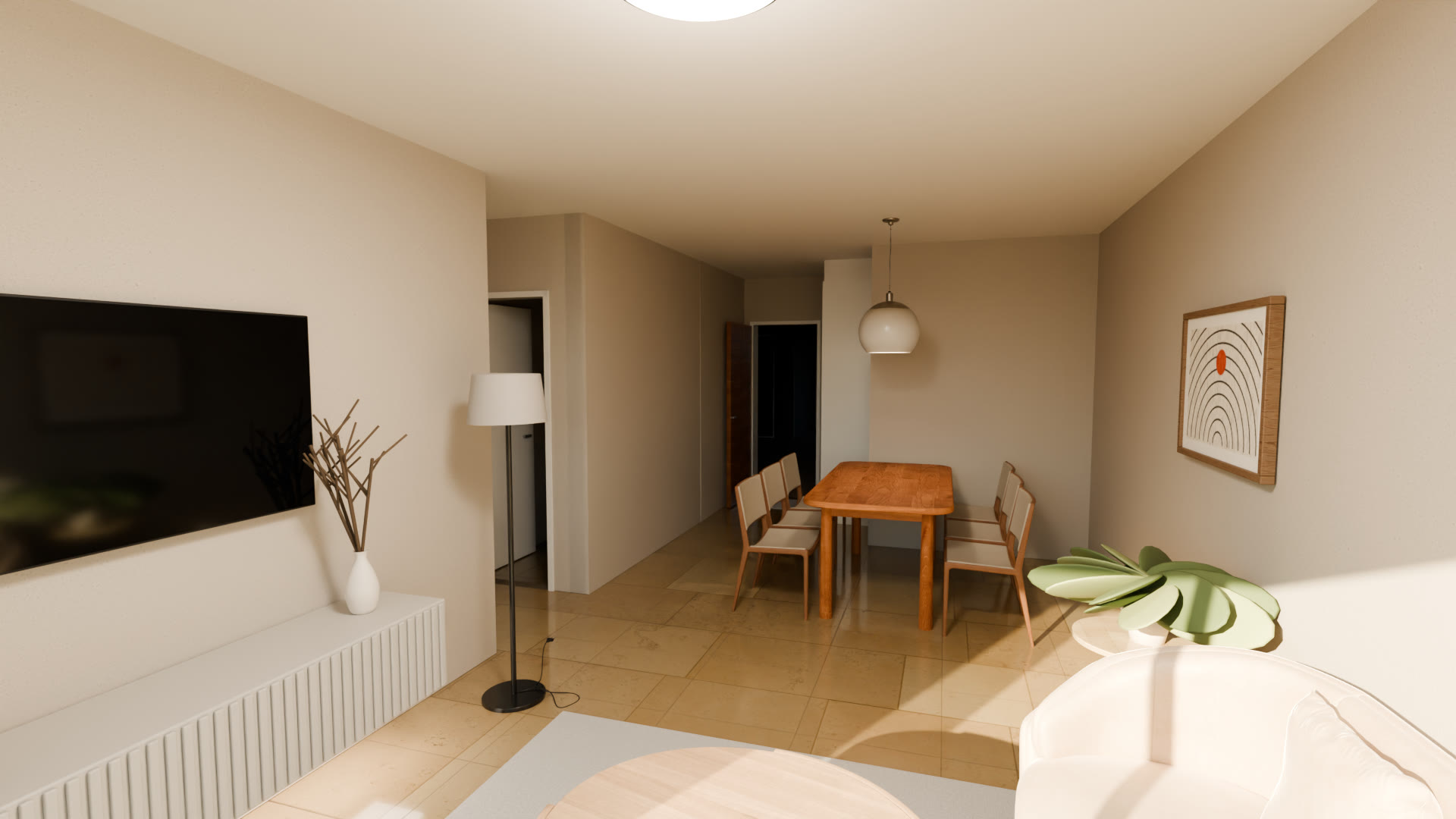
- A walkthrough of each unit. Step into the apartment and move through it with a finger, with the project's actual finishes.
- A clear way to get in touch. A WhatsApp or contact button that already says which project and which unit it's about.
You can try that experience in the Maconda XXIV building demo, an unofficial working demo based on a 12-story building in Quilmes, near Buenos Aires, marketed by Otamendi Propiedades. It's what someone scanning the sign from the sidewalk would see.
Local buyers ask different questions
The person who scans your sign isn't like someone who finds you on a listing portal. They know the area better than your agent does. They know whether the street floods, whether the avenue is noisy, how much shade the building across the road casts. Their questions tend to be very specific:
- "Does the rear unit look onto the backyards or onto a blank wall?"
- "Can you see the park from the fifth floor?"
- "Does the balcony get morning sun or afternoon sun?"
Seeing the building in its real surroundings, and the unit in light from different times of day, answers a lot of that before they ever call. And when they do call, they come with a specific question, which is exactly what helps your agent most. More on this in qualified real estate leads.
How to design a sign with a QR code
You don't need to redo the whole sign. But a few details decide whether the code gets used:
- Size and height. It has to be scannable from the sidewalk, without crossing the street or leaning over the fence. If the sign is mounted high, the code has to be big.
- A line that says what it opens. "Scan to walk through your apartment" works far better than a bare code nobody knows the purpose of.
- Contrast. Light background, dark code, and never printed on top of the rendering.
- A second code at eye level. On the hoarding or a small sign by the site entrance, for people on foot.
And one thing that often gets skipped: test it with several phones, in daylight and at night, before you print. There's more about the sign itself in a construction sign that sells.
One link, everywhere
The QR code on the sign opens the same link your agents send on WhatsApp, the same one in your ads and the one embedded on your website. That has a practical upside: there's only one piece of material to keep current. When a unit sells, it shows as sold on the sign, on the website and on the agent's phone at the same time.
It also makes it easier to see what's working. If the contact button opened from the sign sends a pre-filled message that mentions the site, your agents know which inquiries came from the sidewalk and which came from social media or portals, and you can decide where to spend. I cover how the same material gets shared in 3D walkthroughs over WhatsApp and 3D walkthroughs on the phone.
Does it work for houses and gated developments?
Yes, with one difference. In a gated development or a subdivision, the sign is usually at the entrance or on the lot itself, and whoever sees it is already inside, looking at land. A QR code that opens the walkthrough of the house planned for that lot, with the floor plan rising into a house and morning, afternoon and evening light, shows them on the spot what today is just grass. The Americana 35.64 house demo, an unofficial working demo based on a Viviendas Roca model, is an example of that experience. More in 3D walkthroughs for gated developments and subdivisions.
What a well-done QR code gets you
A QR code doesn't replace your agents or your sales office. What it does is put to work the people who already look at your site every day and currently walk away without a trace. It gives local buyers a no-pressure way to learn about the project, and it gives your agents inquiries from people who've already seen the unit.
I work remotely from Buenos Aires (UTC−3): you send me the plans, the finishes and the location, approve the material through a link, and get the interactive building ready for the QR code on your sign, your website and WhatsApp. If you want to see how yours would look, message me on WhatsApp at +54 9 11 6193-3176 or email facundocampo100@gmail.com. I answer in English and Spanish.
Frequently asked questions
Does the QR code need updating when availability changes?
No. The code always opens the same link; what changes is what that link shows. When a unit is reserved, it's marked in the material, and anyone who scans the sign sees it as unavailable, with nothing to reprint.
Do people need to install an app to see it?
No. It opens in the phone's browser, and the phone's built-in camera reads the QR code. That's why it works for anyone walking past.
Should the QR code go up before construction starts?
Yes. From the moment there's a sign on the lot, people are looking at it. The sooner they have something to scan, the sooner local inquiries start coming in.