Sales & pre-construction
Pre-construction buyer objections and how to answer them by showing
In short: Pre-construction buyer objections almost always come from not being able to see what they're buying. Answering them with the unit walked through, furnished and in its real light works better than answering them with arguments.
Pre-construction buyer objections repeat in almost every project: "I can't picture it," "I'd rather wait until construction is further along," "it looks small," "what if it doesn't turn out like the pictures?" Most of them come from the same place: the buyer can't see what they're buying. That's why they're better answered by showing than by explaining. People argue with an argument. They don't argue much with a unit they've just walked through.
Why off-plan objections are different
When you sell a resale apartment, the buyer visits, touches things, opens the windows. Their objections are about what they see: the state of the bathroom, the noise, the monthly fees. Off-plan, the buyer sees nothing. Their objections are about what they can't see, so they're vaguer and much harder to answer with words.
Agents usually respond with more information: dimensions, the specification sheet, the developer's track record. All of that helps, but it doesn't remove the feeling of buying blind. Seeing does.
Here are the most common objections and what to show for each.
"I can't picture it"
This is the mother of all objections, and it's rarely said in those words. It's disguised as "let me think about it" or "I need to look at it with my partner." Behind it is someone who looked at a floor plan and couldn't turn it into an apartment.
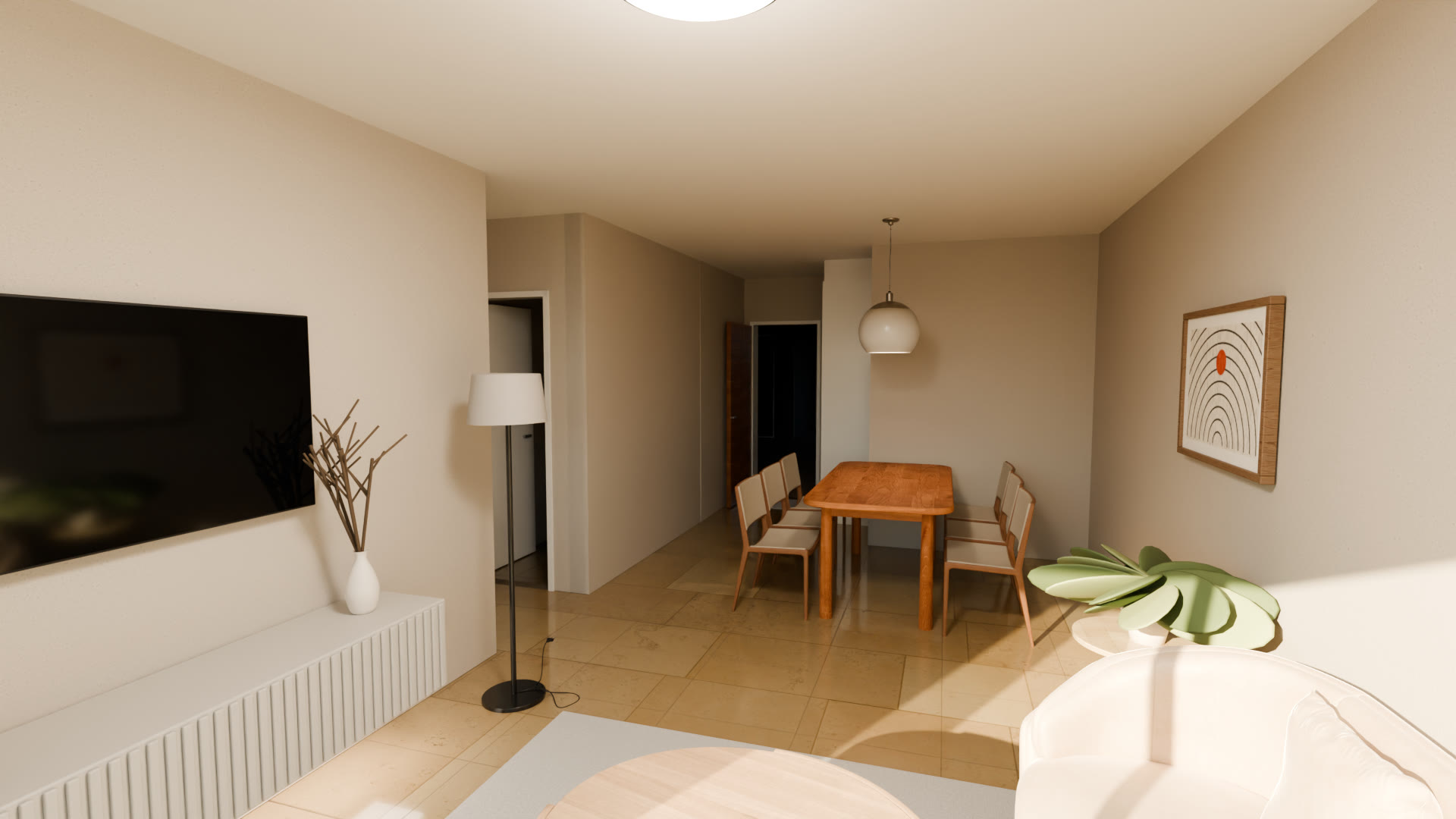
What to show: a walkthrough of the unit, furnished and with the project's finishes. The buyer steps in, walks from the living room to the kitchen, looks out from the balcony. They no longer have to imagine anything. More in 3D virtual tours for apartments.
"I'd rather wait until construction is further along"
This is the most expensive one for a developer, because every month of waiting is a unit still on the books. Sometimes it's doubt about the developer, and sometimes the buyer just wants to see something before committing.
What to show: the finished building on its real street and the unit inside. If the buyer wants to see the construction to understand what they're getting, you can show them today what the construction will become. And if the doubt is about the developer, show their past finished buildings with real photos, next to the renderings that were used to sell them. See how a new builder earns trust and construction progress photos and renderings.
To be honest, some buyers will wait anyway. But someone who waits after walking through their unit comes back much closer to a decision than someone who waits without having seen it.
"It looks small"
Very common with studios and one-bedrooms. The buyer reads the square footage and remembers a friend's place that felt like a shoebox. Or they look at the plan and can't see where the sofa goes.
What to show: the room furnished with real-size furniture. The table for four, the three-seat sofa, the queen bed with room to walk around it. What convinces people isn't the number. It's seeing that real life fits. More in virtual staging.
"What if it doesn't turn out like the pictures?"
A fair objection. Many buyers have heard stories about apartments that looked nothing like the brochure.
What to show: material that respects the dimensions on the plans and the finishes in the specification, with no embellishments that won't be delivered. And say it out loud: "What you see is what gets delivered, with these finishes." If there are decorative elements that aren't included, like furniture, make that clear. That honesty builds more trust than a spectacular image. There's more on checking material before it goes out in reviewing a rendering before you approve it.
"Does it get light?" and "What's the view?"
Two questions a floor plan never answers. Buyers want to know whether the living room gets sun, whether the bedroom is dark, whether the balcony looks at the park or at the wall next door.
What to show: the same room in morning, afternoon and evening light, and the building in its real surroundings, with the neighbors it actually has. See 3D walkthroughs by day and by night.
"It's expensive for the area"
Material alone won't answer this one, but it helps. Often the buyer is comparing price per square foot against a resale unit nearby or another project, without seeing the differences.
What to show: the finishes in place, the amenities, the unit with its balcony and its orientation. When buyers see what that price includes, the comparison changes. You won't win everyone; some people will still go for the cheapest option. But someone who values what they see stops comparing numbers alone. I cover this in defending your price per square foot.
"I need to run it by someone"
The partner, the parents, the business partner, the accountant. It's a natural part of a big decision, and it's better to make it easier than to push.
What to show: a link the buyer can forward, which the other person can walk through alone on their phone. That way everyone has an opinion about the same thing, not about what the buyer remembers and tries to describe. Or suggest a video call to walk through the unit with everyone.
A way to work on objections with your team
One exercise that helps: have your sales team write down, for two or three weeks, the objections they hear, in the buyer's own words. Then group them, and for each group decide what to show. That way every agent has the link or image that answers each doubt at hand, and doesn't depend on how good they are at explaining. More in training your sales team to sell off-plan.
You can see how several of these objections get answered in the Maconda XXIV building demo, an unofficial working demo based on a 12-story building in Quilmes, near Buenos Aires, marketed by Otamendi Propiedades.
If you have a pre-construction project and the same objections keep coming up, message me on WhatsApp at +54 9 11 6193-3176 or email facundocampo100@gmail.com. I answer in English and Spanish, and we can look at what material would answer them.
Frequently asked questions
What's the most common objection when buying pre-construction?
Generally, not being able to picture the unit, even though it often shows up as "let me think about it" or "I'd rather wait." That's why showing the unit walked through and furnished tends to clear several objections at once.
Doesn't showing a furnished unit set false expectations?
Not if you're clear about what's delivered and what isn't. Furniture helps buyers understand the space. What has to match the finished unit are the dimensions, the finishes and the windows.
Can legal or financing objections be handled the same way?
No. Questions about contracts, deposit protection or financing need clear information from the developer and, when needed, a professional. Visual material answers questions about what's being bought, not about how it's signed.