Brand
Construction progress photos and renderings: using both to keep selling
In short: Construction progress photos prove a project is really being built, and renderings show how it will look when it's done. Shown together, they give buyers evidence and the finished picture at the same time, which keeps the sale going for the whole build.
Construction progress photos prove the building is actually going up; renderings show what it will look like when it's finished. Each one alone leaves a gap. Put side by side, they give buyers both the evidence and the end result, and that pairing keeps a development selling from the first excavation to handover.
What's wrong with showing only the site?
A construction site is not an attractive place. Mud, rebar, formwork, a crane. To a builder, a fresh concrete slab is great news. To a buyer scrolling on their phone, it's a gray photo that says nothing about the apartment they're paying for.
Progress photos on their own answer "is it moving?" but not "will I like living there?" And during a long build, that second question is the one that keeps undecided buyers interested and reassures the ones who already signed.
And what's wrong with showing only renderings?
The opposite problem. If a development has been on the market for a year and the website still shows only the same renderings, buyers start to wonder whether anything is happening on site. A rendering is a promise. Without proof that the promise is being kept, it starts to look like an advertisement and nothing more.
That's especially true for buyers who live far away and can't drive past the site. For them, the only window into the build is what you choose to publish. More on that buyer in selling to remote investors and buyers.
How do you combine them?
Same viewpoint, two moments
The most effective format is also the simplest: a progress photo taken from the same angle as a rendering, shown next to it. The street corner where the facade rendering was framed, photographed every few weeks. Buyers see the gap between today and the finished image shrink, update after update.
To make this work, plan the viewpoints early. If the facade rendering is framed from the opposite sidewalk, that's where the site photos should be taken from too. It sounds obvious, but it's easy to forget once construction is underway.
By milestone, not by date
"Update for March" means little to a buyer. "Structure reaches the eighth floor" or "windows are going in" means a lot. Organizing updates around milestones gives each one a story and makes it easy to pair with the right image: structure photos with the facade rendering, finishing-stage photos with interior renderings.
Progress as a sales argument
Every milestone is a reason to contact people who inquired and didn't buy. "The structure is complete, here's how it compares with the rendering" is a follow-up message with real news, not a generic "are you still interested?" It reopens conversations without pressure.
What should you show at each stage?
- Before breaking ground: the real lot and the facade rendering on its block, so buyers recognize the corner.
- Excavation and structure: site photos next to the facade rendering from the same spot. This is where the contrast is biggest and where seeing progress builds the most confidence.
- Envelope and facade: the real building starts to look like the rendering. Showing that is the best proof that what was promised and what's being built match.
- Finishes: interior renderings and the chosen finishes, alongside photos of the materials arriving on site.
- Handover: photos of the finished building next to the original rendering. That's the material that sells your next project.
Matching rendering and reality is your brand
Every comparison photo is a small test. If the building ends up looking like the rendering, the company gains credibility with each update. If it looks noticeably different, the comparison works against you.
That's why renderings for a development should be faithful to the plans and the spec sheet, not idealized. An accurate rendering becomes a strong asset as the build progresses; an exaggerated one becomes a liability. It's the same reasoning behind building a developer's brand project by project, and it matters even more for a new developer with nothing finished to show.
Progress updates and a 3D walkthrough
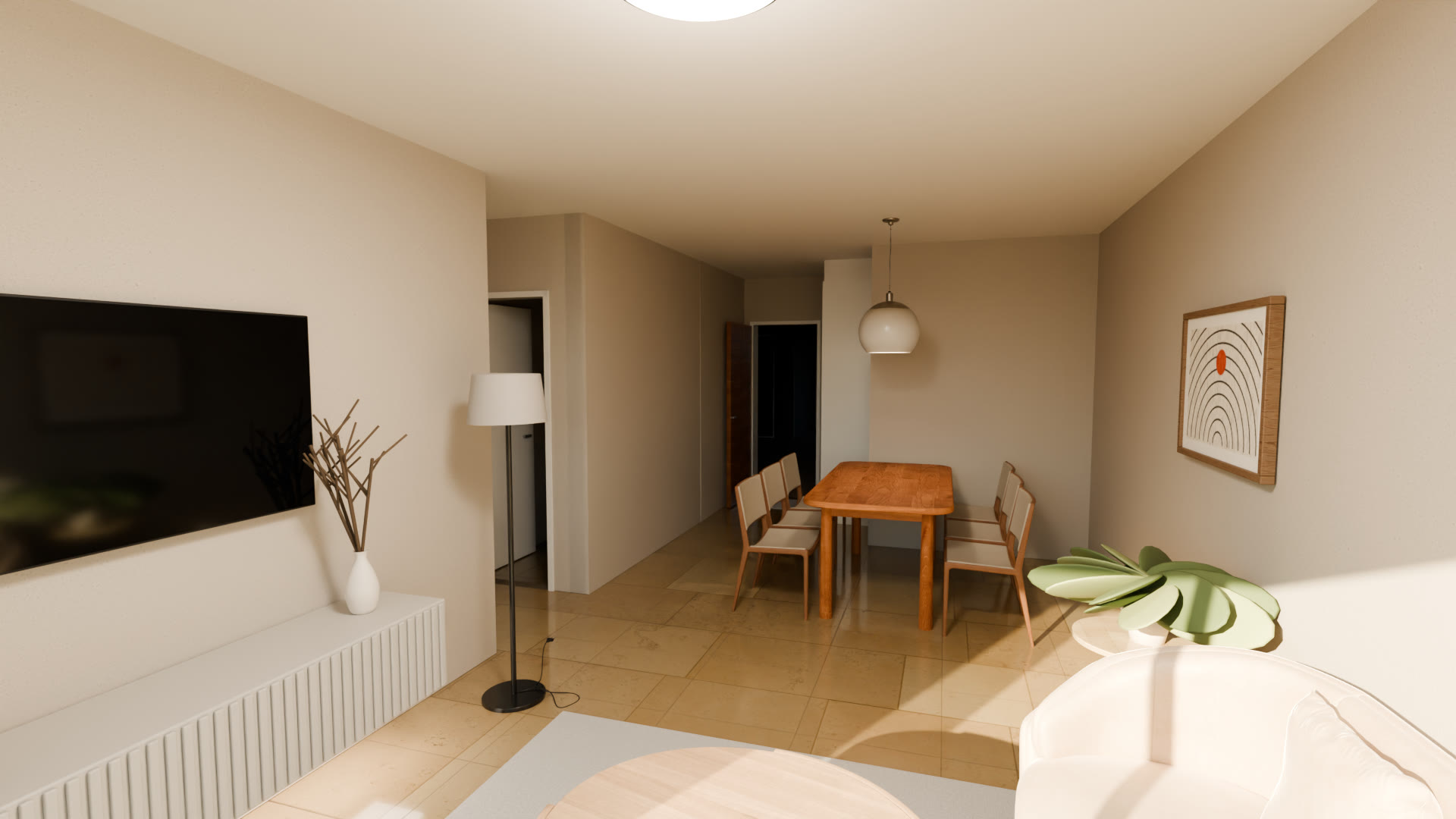
Progress photos show the outside of the building and the general state of the site. They can't show what the finished unit will feel like inside, especially while it's still bare concrete. That's where a walkthrough fills the gap: a buyer who just saw the structure reach their floor can open the link and walk through their own unit, furnished and finished.
In the Maconda XXIV demo, an unofficial working demo based on a building in Quilmes, near Buenos Aires, you pick a floor and a unit and walk through it by scrolling on your phone. Paired with a progress update, it answers both questions at once: "it's going up" and "this is what you'll get."
Where should each piece go?
- Social media: photo-and-rendering comparisons as carousels, one per milestone. See what a builder should post on Instagram.
- The development's website: a progress section with the latest photo and the rendering beside it.
- Email or WhatsApp to buyers: the milestone, the photo and one line about what comes next.
- The site sign: the facade rendering, which becomes more believable to people walking by as the building rises behind it.
Closing the build
At handover, the final comparison, the finished building next to the rendering that sold it, is probably the most valuable image the company will have. It's proof that it delivered what it showed, and it's the first thing to put in front of buyers of the next development.
If you're about to start construction and want renderings that will hold up next to the real building, message me on WhatsApp at +54 9 11 6193-3176 or email facundocampo100@gmail.com. I work remotely from Buenos Aires (UTC−3) and answer in English and Spanish.
Frequently asked questions
Should you keep showing renderings once construction has started?
Yes. Renderings show buyers what the bare structure will become, and progress photos prove it's happening. Taking one away leaves buyers with only half the picture.
How often should you publish construction progress?
When there's a milestone worth telling, rather than on a fixed calendar. A clear milestone with a photo and a short explanation does more than frequent updates that look the same.
What if the building looks different from the rendering?
Small differences in light or landscaping are normal and easy to explain. Real differences in design or finishes hurt credibility, which is why renderings should stay faithful to the plans from the start.
Do progress photos help with undecided buyers?
They do, because each milestone gives you a real reason to follow up. Showing that the building is rising reduces the fear of buying into something that might not get finished.