Brand
Instagram for real estate developers: what to post to get inquiries
In short: A developer's Instagram brings in inquiries when it clearly shows what's for sale, lets people see how the company works and gives anyone interested a short path to ask. Posting a lot without that path isn't enough.
A real estate developer's Instagram brings in inquiries when it does three things: shows clearly what people can buy, lets them see how the company works, and gives anyone interested a short, obvious way to ask. An account that posts every day but skips one of those three tends to collect likes from other builders and very few messages from buyers.
What is Instagram for, for a developer?
For most developers and builders, Instagram isn't where the sale closes. It's where a buyer checks them out. Someone sees a sign, an ad or a listing, and before writing, they look at the account.
In that moment, the profile has to answer a few silent questions:
- Is this company real and active? Recent posts, real projects, real people.
- What are they selling right now? Not just past work, but what's available today.
- Do they build well? Finished projects, details, progress.
- How do I ask? A clear contact, a link that works.
Seen that way, the account is less of a magazine and more of a shop window that also proves you can be trusted.
The kinds of posts that work
You don't need dozens of formats. A handful of types, repeated well, cover what buyers want to see:
- The project for sale. The facade on its street, the interiors of each unit type, the location. This is the core and should be easy to find, ideally in a pinned post or a highlight.
- Unit types, one at a time. A carousel per unit type with the furnished floor plan, two or three interiors and the key facts. Buyers looking for a two-bedroom can go straight to it.
- Construction progress. Real photos and short videos from the site. They prove the building is moving.
- Finishes and details. The kitchen, the bathroom, the windows, the floors. Buyers care about what they'll touch every day.
- Finished projects. Before and after, the rendering next to the finished building. Nothing builds trust like showing that what you promised is what you delivered.
- The people behind it. The team, the architect, the site manager. A face makes it easier to write a message.
- Short videos. Reels of a development, like the floor plan turning into the furnished unit or a walk through the apartment, tend to travel further than still images.
Showing a development that doesn't exist yet
This is the main challenge for pre-construction projects: there's nothing to photograph. A fenced lot and a crane don't make anyone want to buy.
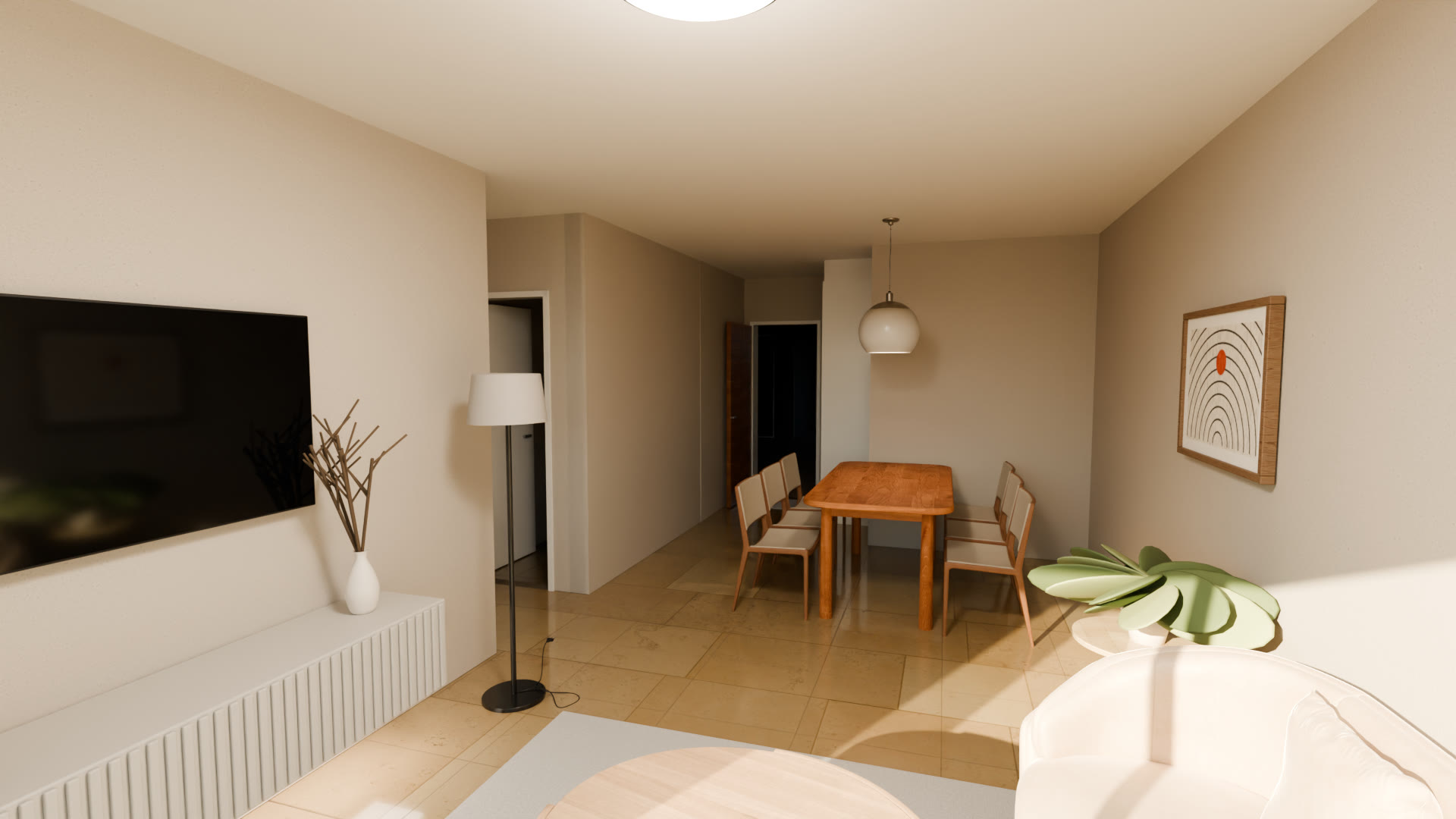
That's where renderings and walkthroughs carry the account. The facade on its real street, interiors with the actual finishes, the view from a balcony at sunset. A clip of someone moving through the unit on their phone shows something static images can't: how the space connects. There's more about adapting images for each channel in renderings for social media and listing portals.
The key is consistency. If every image looks like it came from a different project, the account feels scattered. A consistent style makes the project recognizable.
How often should you post?
There's no magic number, and I won't invent one. What matters more than frequency is regularity and quality. An account that posts a couple of times a week with clear, useful content does better for a developer than one that posts daily with filler.
A practical approach is to plan around the project's milestones: launch, each unit type, construction stages, finishes, handover. That gives you a natural calendar without having to invent things to say.
The path to the inquiry
This is where many developer accounts fail. The content is good, but asking is hard.
- The bio says what you sell and where, in one line, with a direct contact.
- The link in the bio goes to the project, not to a generic home page. Better yet, to a page where the buyer can tap a floor and walk through a unit.
- Posts end with a clear next step: "Message us to walk through this unit" works better than "Contact us for more information."
- DMs get answered quickly. A buyer who writes on Saturday and hears back on Wednesday has probably moved on.
When someone does ask, sending them a walkthrough link instead of a PDF answers half their questions before the call. There's more on that in 3D virtual tours for apartments, or you can open the Maconda XXIV building demo, an unofficial working demo.
What to avoid
- Only posting finished projects while the one for sale is buried.
- Generic quotes and stock images that say nothing about you.
- Images that oversell. If the unit won't have that view, don't show it.
- Hiding the contact. If someone has to search for how to reach you, many won't.
The visual material that feeds the account
An account is only as strong as the material it has. A good set of renderings and a walkthrough per unit type can feed months of posts, ads and stories. When paid ads come into play, the same material powers them too, as covered in social media ads for developments.
I make renderings, walkthroughs and short videos for developers, working remotely from Buenos Aires, Argentina (UTC−3). If your account needs material that brings in real inquiries, message me on WhatsApp at +54 9 11 6193-3176 or email facundocampo100@gmail.com. I answer in English and Spanish.
Frequently asked questions
What should I post if the development hasn't started yet?
Renderings of the facade and interiors, the location, the unit types and short videos of the walkthrough. They let buyers see what they'd be buying while the lot is still empty.
Is it worth showing construction progress on Instagram?
Yes. Real progress photos prove the project is moving and build trust, especially for pre-construction buyers. They work best alongside renderings that show the finished result.
Is it better to post one carousel per unit type or one with the whole building?
One per unit type is usually clearer. Buyers look for the type they need, and a focused carousel answers their questions faster. The whole building fits better in the cover post or a highlight.
Does Instagram replace the developer's website?
No. Instagram attracts and builds trust; the developer's website is where buyers find all the information, the availability and the walkthroughs. The best results come from linking one to the other.