Sales & pre-construction
Instagram and Facebook ads for real estate projects: what to show
In short: A project ad on Instagram or Facebook generates inquiries when it shows something the buyer wants to see, like their future living room, and sends them somewhere they can walk through the unit and ask. The creative and the destination matter as much as the targeting.
Instagram and Facebook ads for a real estate project generate inquiries when they show something the prospect wants to see, say something specific, and send them somewhere they can keep looking and get in touch. Targeting helps you reach the right people, but what decides whether those people stop scrolling and write to you is the ad itself: the image or video, the copy and where the click goes.
Why do so many real estate ads bring weak leads?
If you've ever run ads for a project, this has probably happened to you: lots of messages that just say "info" or "price," and most of those people never reply again. There's a reason for it.
Many apartment ads look the same: the facade under a perfect sky, the logo, "1 and 2 bedrooms," "flexible financing." In the feed, between a friend's video and a recipe, that image slides by without anyone noticing. And whoever does click is often just curious, without having understood what's on offer.
Three things are worth changing: what you show, what you say and where you send people.
What to show in the image or video
The facade helps people recognize the project, but it's rarely what makes them stop. What stops a thumb is something the person can picture themselves living in:
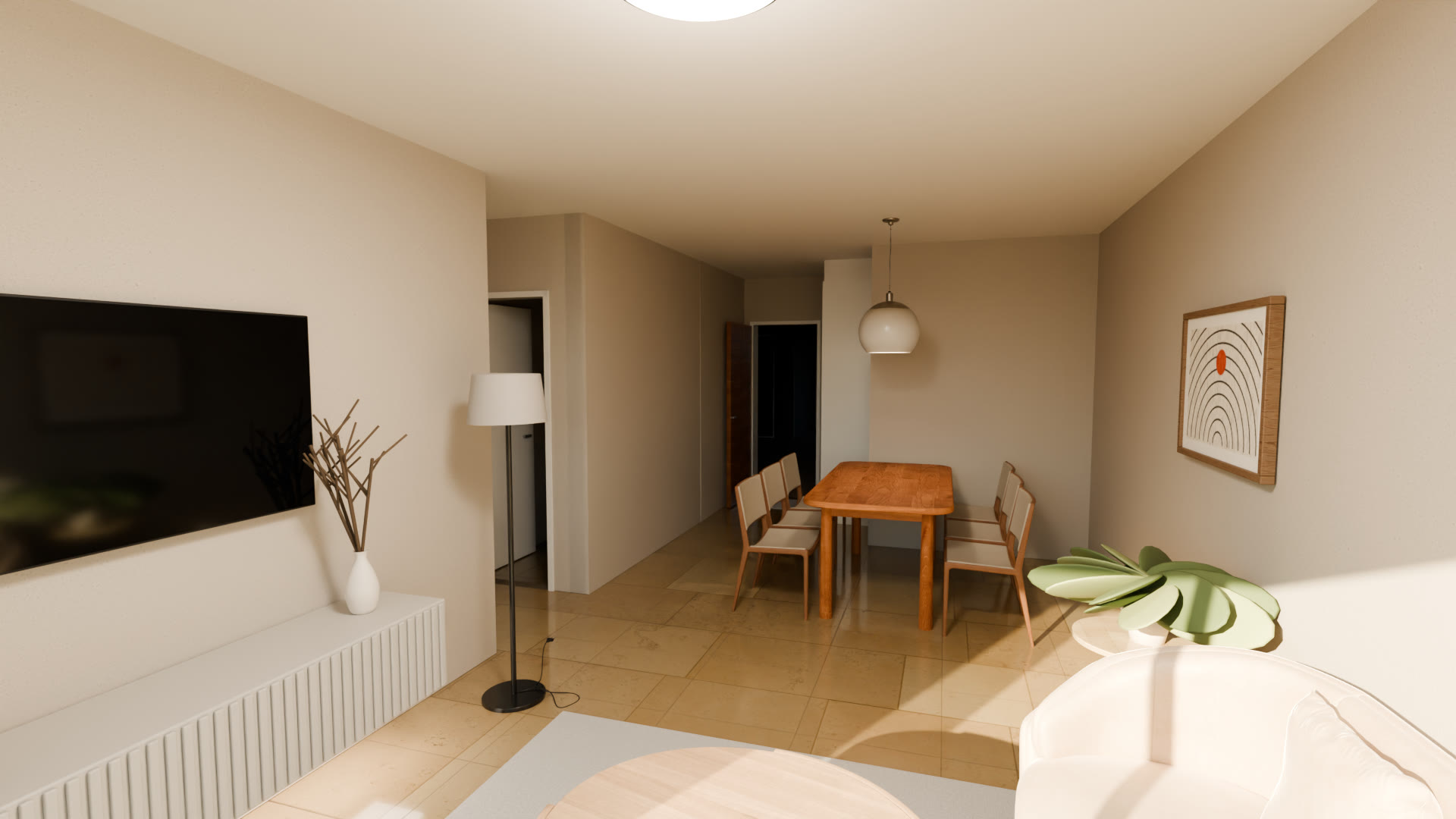
- The furnished living room in afternoon light. It's the image buyers want to see of their future apartment.
- The balcony and its view. If the project has a view worth showing, show it.
- The open kitchen or the main bedroom. Specific rooms, not a general idea of the building.
- The building on its street. For local buyers, recognizing the corner is a strong hook.
- A short video moving through the unit. Motion stops the scroll better than a still, and if it tells a small story (from the front door to the balcony, from day to night) people watch it to the end.
There's more on social-first material in renderings for social media and listing portals and reels and short videos for a project.
What to say in the copy
The ad copy has to answer, in one line, why this matters to the person reading it. Specific beats generic:
- Instead of "a new concept of living," try "one-bedroom with a balcony over the garden, three blocks from the subway."
- Instead of "great location," name the neighborhood and a landmark people know.
- Instead of "contact us," give a clear invitation: "walk through the unit on your phone."
And one rule that saves you trouble: don't promise what the project doesn't have, in the image or the copy. Someone who inquires under a false impression won't buy, and they'll talk badly about the project.
Where to send the click
This is the part that gets neglected most. The ad can be great, but if it lands on the developer's home page, a long form or a PDF that won't load on a phone, people leave.
Two destinations tend to work:
- A WhatsApp or Messenger chat with a pre-filled message. Fast and direct. Your agent should reply with a link to the unit, as covered in using WhatsApp to sell apartments.
- The project page with the interactive building. The prospect taps a floor, sees which units are left, steps into one and walks through it. When they write, they already know what they want. See a real estate project landing page.
The first brings more messages; the second brings further-along messages. Many developers use both depending on the stage: early on, the chat, to build a list of prospects; later, for specific units, the page with the walkthrough.
You can see the kind of experience the prospect lands on in the Maconda XXIV building demo, an unofficial working demo based on a 12-story building in Quilmes, near Buenos Aires, marketed by Otamendi Propiedades.
One ad per project or one per unit?
At the start of pre-sales, a general ad for the project works to introduce it. But as sales move along, it pays to switch to ads by unit type:
- "Last two-bedroom with a private terrace" for the unit that's left.
- "One-bedroom investment unit steps from campus" for investors.
- "Ground floor with its own patio" for the family with a dog.
Each with an image of that unit and linking to that unit. It's a way to move your slowest inventory without cutting the price, as I explain in selling rear-facing and low-floor units.
Ads for buyers who don't live nearby
Instagram and Facebook let you show ads to people in other cities or countries, and for some projects that's an important audience: the investor from another region, the expat who wants to buy back home, the buyer eyeing a vacation town. For them, the creative and the destination matter even more, because they can't drop by the site or the sales office. What they see in the ad and what they walk through afterward is all they've got. More in selling to remote investors and buyers.
What not to do
- Run the same image for months. People who follow the project get tired of it and stop seeing it.
- Change the ad every day. The platforms need a few days to learn who to show it to.
- Judge only by number of messages. What counts is how many turn into a meeting or a reservation, not how many say "info."
- Show units that are already sold. If someone asks about the living room in the ad and that unit is gone, have the alternative ready.
Material that keeps your ads fresh
A project with interior renderings, the facade on its street and a walkthrough of each unit type has enough to pull ads from for the whole pre-sale: images, short videos and a destination for the click. I make that material remotely from Buenos Aires: you send me the plans and finishes, approve through a link, and get images, video and the walkthrough ready for social media, your website and WhatsApp.
If you want to see how your project would look in an ad, message me on WhatsApp at +54 9 11 6193-3176 or email facundocampo100@gmail.com. I answer in English and Spanish.
Frequently asked questions
Which works better in an ad, an image or a video?
It depends on the goal, and the best move is to test both. A short video usually stops the scroll more; a well-composed image of a room is easier to take in at a glance. Having both lets you compare with real results.
Do you run the ads?
No. I make the images, videos and the walkthrough. The campaign, targeting and budget are handled by your team or your agency, using that material.
Can AI-generated images work for ads?
They can help with general ideas, but there's a risk: showing something the project doesn't have. To sell real units, the image should respect the project's actual dimensions and finishes. See AI renderings for real estate.