Renders
AI renderings for selling a development: what works and what doesn't
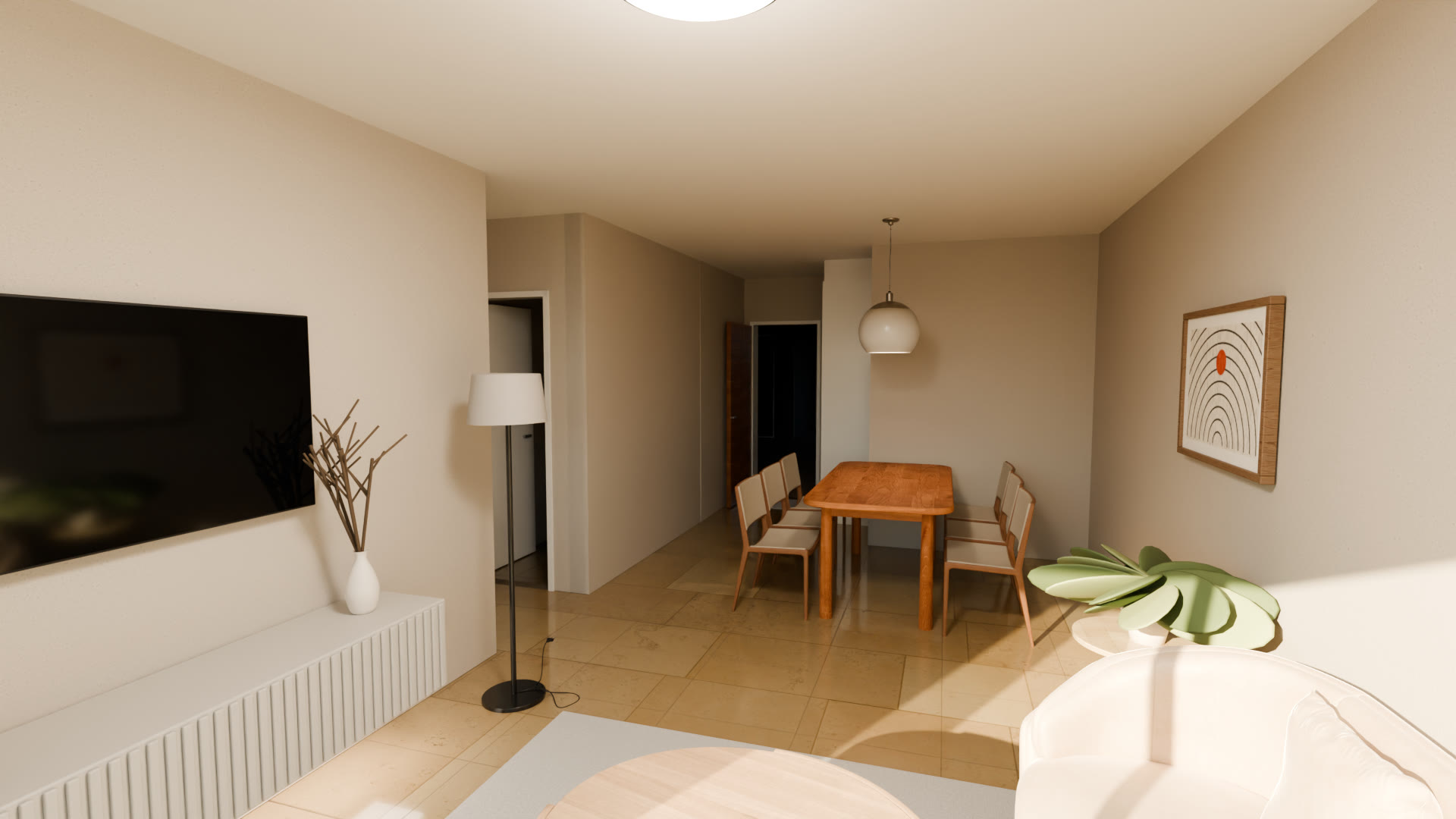
In short: AI-generated images are useful for ideas, mood boards and social media posts, but to sell a pre-construction development it's better to use material made from the floor plans, because what you publish is part of your offer and buyers will later compare it with what they get.
AI-generated images are handy for exploring ideas, building a mood board or adding posts to your social feed. To sell a development, you need something else: material made from the project's floor plans, where every room measures what it measures and every window is where it'll actually be. What you publish is part of your offer, and sooner or later the buyer will compare the image with what they get.
What is an AI rendering?
The term gets used for two different things. One is an image an AI tool generates from a text prompt or a sketch: the result looks good, but the tool decides the details. The other is using AI as a helper inside work that does start from the floor plans, for example to retouch or animate an image.
Several Argentine studios already offer some of this. According to their websites, as checked in October 2026, DP Renders lists "AI renders" among its services and 33ARCHVIZ offers looping animations made with AI. Each studio can explain how it uses it and what it starts from; it's worth asking.
What are AI images good for?
They have real, useful applications:
- Exploring ideas early in a project, before the finishes are set.
- Building a mood board to get your team and the architecture firm on the same page.
- Lifestyle posts for social media that convey a way of living without showing a specific unit.
- Quick tests of colors or furniture styles.
In all of these, the image doesn't promise anything specific about the project. It conveys an idea.
Where's the risk when you're selling?
In a pre-sale, buyers decide by looking at images because nothing has been built yet. If the image shows a bigger living room, a larger window, a view that doesn't exist or a finish that isn't in the spec, the problem shows up at handover.
In many countries, what you put in advertising can end up treated as part of the offer. In Argentina, for example, the Consumer Protection Law (Law 24,240, article 8) says the specifics in an ad bind the seller and are considered part of the contract. Rules vary from country to country, so check with a local lawyer for your market. Either way, an image of a development isn't an innocent illustration: it's part of what you're offering the buyer. That's why brochures carry an "images for illustration only" disclaimer, but that line won't stop the argument when the delivered apartment looks very different.
An image generated without the floor plans can look flawless and still:
- Change a room's proportions, which is the first thing a buyer notices when they walk in.
- Invent windows or views the building doesn't have.
- Show finishes that aren't in the spec.
- Not match from one image to the next: the same living room, different in every piece.
What should you use to sell off-plan?
Material that comes from the project's actual floor plans and finishes:
- Renderings made from the floor plans, where every room has its real dimensions and every window is where it goes. See what an architectural rendering is.
- The building on its real block, with its neighbors and its true orientation, so buyers recognize the place. See facade and exterior renderings.
- A walkthrough inside each unit type, where the buyer moves from one room to the next and gets a real sense of the proportions. See 3D virtual tours of apartments.
The sales advantage isn't only about avoiding complaints. A buyer who walked through the unit exactly as it'll be reaches out with fewer doubts, haggles less and trusts the developer more. That's the basis for better-qualified leads and for a brand that looks solid.
Can you combine them?
Yes, with a simple rule: anything that shows a specific unit comes from the floor plans; anything that conveys a lifestyle can be looser. A social post with a set table and sunset light doesn't promise any dimensions. A rendering of the living room in unit 6B does.
In the Maconda XXIV demo, an unofficial working demo based on a 12-story building in Quilmes, near Buenos Aires, marketed by Otamendi Propiedades, every image comes from the project's public floor plans and brochure: the building on its block, the plan of each floor with its units and a walkthrough inside an apartment.
How do you evaluate a rendering provider?
A few useful questions, whatever tools they use:
- Do the images come from the project's floor plans, with their dimensions?
- Are the finishes the ones in the spec, or does the studio pick them?
- Does the same room look the same in every piece?
- Can I review a draft before it goes public?
More criteria in how to choose a rendering studio.
I work remotely from Buenos Aires (UTC−3), with delivery by link and approvals by email or video call. If you have a development about to launch and want material that shows what you'll actually deliver, message me on WhatsApp at +54 9 11 6193-3176 or email facundocampo100@gmail.com. I answer in English and Spanish, and we'll look at it with your plans.
Frequently asked questions
Are AI renderings useful for a real estate agency?
They're useful for ideas, mood boards and social posts that don't show a specific unit. To sell a particular unit, it's better to use material made from the floor plans, because what you publish is part of your offer.
Does an advertising image of a development bind the developer?
It depends on the country. In Argentina, article 8 of the Consumer Protection Law says the specifics in advertising bind the seller and are considered part of the contract. Elsewhere the rules differ, so if you have a specific question, check with a local lawyer.
How can I tell if a rendering was made from the floor plans?
Ask the studio what they used as a starting point and compare the image with the floor plan: room dimensions, window and door positions and finishes should all match.
What material works best for a pre-sale?
Renderings of the building on its block and of the interiors, plus a walkthrough inside each unit type, all made from the floor plans. See what to have ready for a launch.