Markets
3D renderings and walkthroughs in Chile: selling en blanco and en verde
In short: In Chile, an apartment sold en blanco or en verde sells when the buyer understands what they're getting before it exists. A 3D walkthrough on the phone shows the furnished unit, its light and its view, and helps the buyer reserve without waiting for the show apartment.
3D renderings and walkthroughs help Chilean developers sell apartments en blanco (before construction starts) and en verde (while it's underway) without asking buyers to picture everything from a floor plan. The buyer opens a link on their phone, walks through the furnished unit and forwards it to whoever has a say. I make them remotely from Buenos Aires for developers and real estate agencies in Chile.
En blanco and en verde: two stages, two kinds of doubt
If you're a developer or a broker coming to Chile from somewhere else, these two terms are worth learning first, because they show up in every listing and every sales conversation:
- En blanco ("in white") means the project is approved or close to it, and the lot is still empty. It's roughly what other markets call off-plan or pre-construction. The buyer is buying an idea.
- En verde ("in green") means construction has started. There's a crane and concrete, but no finishes. The buyer can see progress, but still can't see how the place will feel to live in.
The sales material has a different job in each stage. En blanco, it has to answer almost everything: what the building looks like on its street, what's around it, how the floor plan works. En verde, trust in the construction is already there, so the questions get sharper: which orientation is better, how much light the living room gets, which unit has the best view. A single walkthrough covers both stages, from launch to handover, so you don't pay twice for material that expires.
Why the show apartment isn't enough on its own
In many Chilean projects, the piloto (the show apartment, usually inside or next to the sales office) is the main closing tool. Buyers walk it and get convinced. It works, but it has three limits:
- It shows up late. Until it's built, selling en blanco depends on brochures and a handful of renderings.
- It shows one unit type. If the piloto is a two-bedroom, the person looking for a studio or a three-bedroom has to imagine theirs.
- It requires a visit. Someone in Concepción looking at a project in Ñuñoa, or an investor living abroad, won't drop by the sales office on a Saturday.
A walkthrough doesn't replace the sales office. It covers what the piloto can't: every unit type, from day one, for buyers who aren't coming. Sales staff also use it on a screen inside the office to show the units that don't have a piloto. I compare the options in more detail in scale model and show unit vs 3D walkthrough.
Santiago isn't one market
Santiago holds a big share of the country's new supply, and the buyer changes a lot from one comuna (municipality) to the next. A project in Las Condes or Vitacura gets a buyer who inspects finishes, views and shared spaces closely. One in Santiago Centro, Estación Central or La Florida often means small units and an investor thinking about rental income.
For the investor, who often buys more than one unit and rarely lives in it, what matters is understanding the floor plan and orientation fast, and picking the unit that will rent best. They don't need the sales office. They need a clear link and a salesperson who answers. More on that in selling to remote investors and buyers.
For someone buying a home, the walkthrough does something more emotional: the living room in afternoon light, the bed in the bedroom, a table on the terrace. That's what makes them picture themselves inside.
The regions: the buyer is somewhere else
Outside Santiago the picture changes again. In Viña del Mar, Concón or La Serena you get second homes and buyers who live in the capital. In Antofagasta, professionals moving for work. In the south, in places like Puerto Varas, people looking for a change of life.
What they share is distance. The buyer isn't near the project, and often won't be until signing. A link that opens on any phone is worth more there than a showroom nobody can reach.
What the buyer sees
The experience works like the Maconda XXIV building demo, an unofficial working demo based on a 12-story building in Quilmes, Argentina, marketed by Otamendi Propiedades:
- The building on its real block, with the neighbors and the street the buyer recognizes.
- Tappable floors, each with its floor plan and which units are still available.
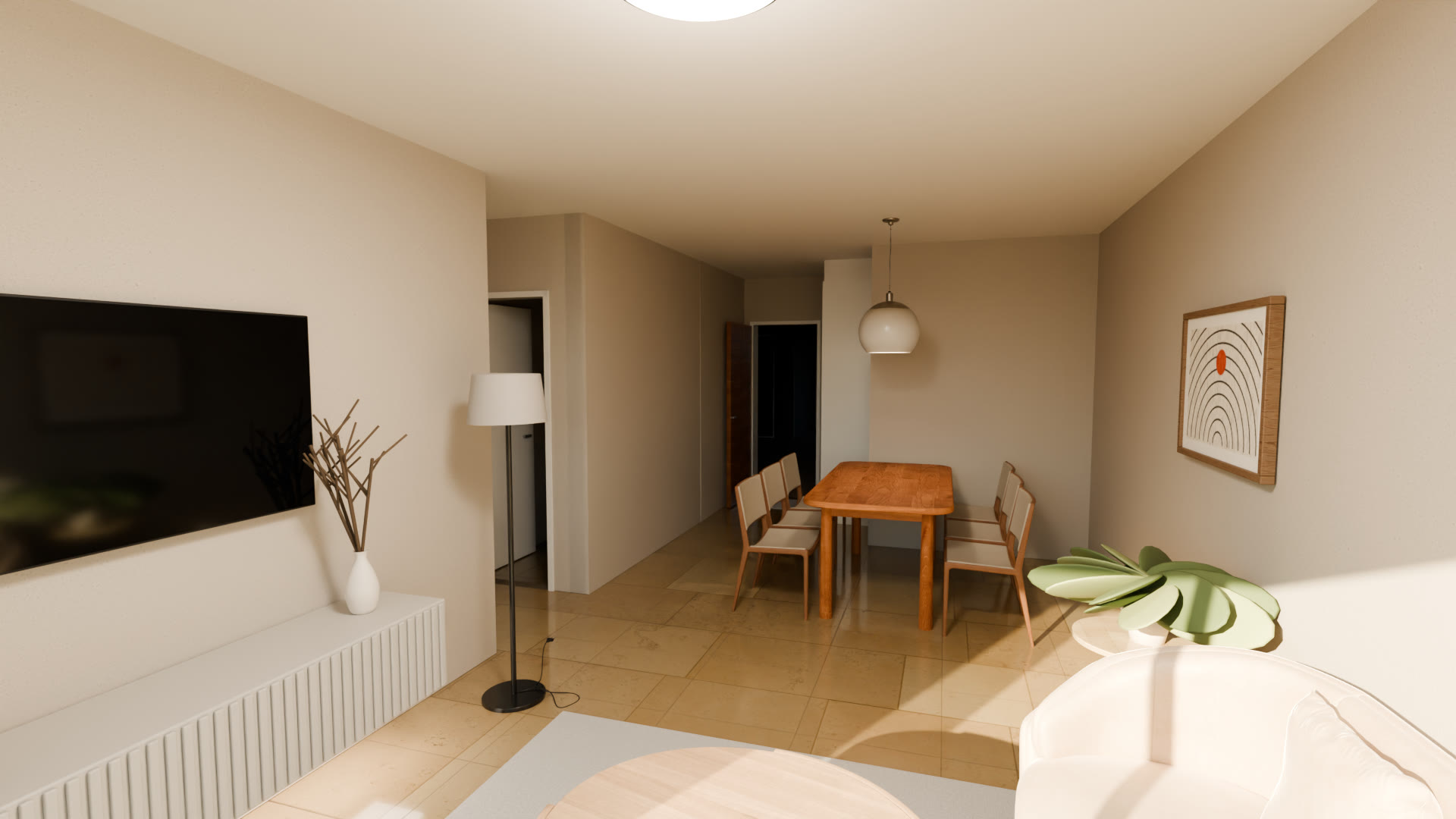
- A walkthrough of each apartment by scrolling or swiping, furnished and with the project's finishes.
For a Chilean project with several towers or many unit types, the availability map keeps sales organized: the buyer sees what's left, filters on their own and arrives at the inquiry knowing what they want. See the interactive unit selector.
One walkthrough per unit type covers every floor where that type repeats. A 40-unit building with 3 types needs 3 walkthroughs, not 40, which matters on the large projects common in Santiago.
Objections the material answers before they're asked
- "Is it as small as it looks on the plan?" A furnished studio shows that a table, a sofa and a desk actually fit. The plan only shows square meters.
- "What will I see from the window?" Showing the real surroundings, without inventing views that don't exist, builds trust.
- "How does it look with the finishes?" Floors, kitchen counters and bathrooms applied to the unit, as in the spec sheet.
- "I want to show my family." The link gets forwarded on WhatsApp and everyone opens it on their own phone.
Working with me from Chile
I work remotely from Buenos Aires, on Argentina time (UTC−3), which is close to Chilean time for much of the year. Here's how it goes:
- You send the plans, the finishes spec, the lot location and who the project is aimed at.
- We talk on a video call to decide which unit types, images and walkthroughs you need.
- You review progress by link, from the office or your phone, and send changes by WhatsApp or email.
- You get the walkthrough as a link ready to share and embed on the project's website, plus images for listing portals, social media and the sales office.
Nobody has to travel. There's more on this in working with a remote rendering studio.
If you have a project en blanco or en verde in Santiago or the regions and want to see how it would look, message me on WhatsApp at +54 9 11 6193-3176 or email facundocampo100@gmail.com. I answer in English and Spanish, and we can start from the plans.
Frequently asked questions
Does a 3D walkthrough work for a project en blanco?
Yes, that's when it helps most. With the plans and finishes defined, you can show the building on its street and every unit type inside, long before there's a show apartment.
Does it replace the piloto?
Not necessarily. The show apartment is still useful for people who visit. The walkthrough adds what it can't do: every unit type, from day one, for buyers who won't come in.
Do you need to travel to Chile?
No. Everything happens remotely: you send the plans, review progress by link, and we coordinate over video call, WhatsApp or email.
How much does it cost?
It's quoted per project, based on the number of unit types and images and whether it includes the unit selector. It doesn't depend on the total number of apartments. See how much a rendering costs.