Sales & pre-construction
What to bring to a real estate trade show so leads keep coming after
In short: At a real estate trade show, the material that matters is what the visitor takes home on their phone: a link to the unit they explored at the booth. That keeps the conversation going after the event, when the buyer is home with their family.
The best material for a real estate trade show is whatever the visitor takes home on their phone and can open again later. At the booth you only have a few minutes to spark interest; the decision comes days later, when that person shows the project to their partner or business associate. If they have a link to the unit they explored, the conversation continues. If all they have is a brochure in a tote bag with twenty others, it probably doesn't.
What actually happens at a property expo?
A trade show is a strange place to sell real estate. It's crowded, it's loud, and there are a dozen projects side by side. Visitors walk the aisles, stop for a few minutes at each booth, collect brochures and leave with a head full of facades that all look alike.
That creates two clear problems for the developer or brokerage paying for the booth:
- Visitors forget. By evening they can't remember which building had the big balcony or which one was on the corner.
- Your agents can't talk to everyone. While one of them walks a couple through a floor plan, three other people look at the model, don't talk to anyone and move on.
Your booth material has to solve both: help a visitor understand the project even if nobody's free to talk, and give them something that brings them back.
What should you have at the booth?
You don't need to fill the space. It helps to think about three moments: the person walking past, the person who stops, and the person who sits down.
- For the person walking past: the facade on its real street. A large image of the building in its actual surroundings, with the street and the neighbors. That's what makes someone slow down. See exterior renderings.
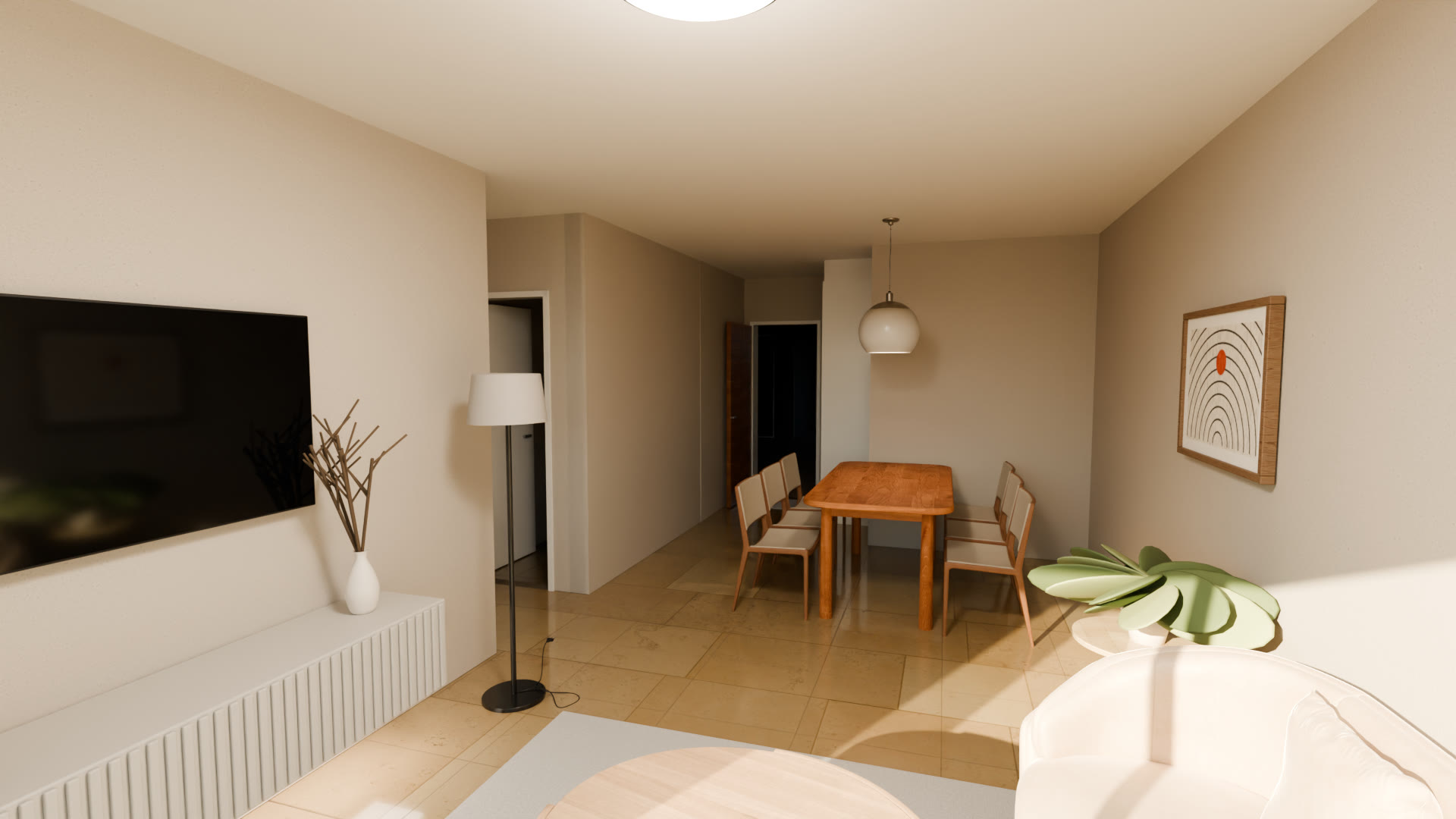
- For the person who stops: a screen with the walkthrough. A tablet or a monitor where visitors tap a floor, pick a unit and walk through it on their own, without waiting for an agent.
- For the person who sits down: the walkthrough of the unit they care about. The agent opens that unit type and they go through it together, room by room, answering questions about what they're both looking at.
And for everyone, a way to take the project with them: a QR code on the booth, the brochure or a small card that opens the walkthrough on their phone.
The screen that works on its own
At a trade show, your agents' time is the scarcest thing you have. A screen with the interactive building takes part of the load: the curious visitor explores alone, sees which units are available, steps into one and walks around. When an agent gets to them, the visitor already has a specific question, like "Is the one-bedroom on the eighth floor still available?"
That question is worth much more than "So tell me about the project." It's a qualified lead that showed up on its own while the agent was busy with someone else. I explain why this kind of prospect pays off most in qualified real estate leads.
You can see how it works in the Maconda XXIV building demo, an unofficial working demo based on a 12-story building in Quilmes, near Buenos Aires, marketed by Otamendi Propiedades. It's exactly what you'd put on the booth screen.
Physical model or screen?
A scale model has something a screen doesn't: it pulls people in. It's physical, you can see it from across the hall, and it says the project is serious. If you already have one, bring it. But it has clear limits: it doesn't show the inside of the units, nobody can take it home, and it doesn't update when a unit sells.
What works well is combining them: the model as the magnet, and the screen next to it for stepping inside the units. More on this in scale model and model unit vs 3D walkthrough.
Brochures work better with a link inside
The printed brochure isn't going away at trade shows. People expect it and take it. The problem is that it gets mixed in with everyone else's, and once it's home it shows little more than the facade and a floor plan.
A clearly visible QR code that opens the building walkthrough changes what the brochure is for: it stops being the final piece and becomes the door to everything else. The same goes for a small card with the QR code and the project name. It fits in a wallet and doesn't end up at the bottom of the bag.
The selling happens after the show
The most common mistake is thinking the trade show ends when the booth comes down. The leads worth having show up over the following days, and you need to be ready:
- Ask for contact details with a reason. "I'll send you the link to the unit you looked at" beats "Leave your email for our newsletter."
- Send the link to that specific unit. Not the general brochure, but the unit type they asked about, with availability.
- Follow up fast. The next day, while they still remember which booth was yours.
- Give them a reason to talk again. A video call to walk through the unit with their family, or a visit to the site.
That follow-up builds on what's covered in following up on real estate leads and using WhatsApp to sell apartments.
What if the show is in another city or country?
At some shows, most visitors don't live anywhere near the project: buyers from other regions browsing in the capital, or expats who time an event with a trip home. For them, the link matters even more, because they won't be able to visit the site or drop by the sales office. What they saw at the show and what they carry on their phone is all they've got. There's more on this buyer in selling to remote investors and buyers.
How I put together material for a trade show
If there's a show on your calendar, start early. You send me the plans, the finishes and the location of the site; you review and approve the images and walkthroughs through a link; and you get everything ready to run on the booth screen and to share on WhatsApp, social media and email. The same material then works for your website, listing portals and sales office, so it isn't money spent on a single weekend.
I work remotely from Buenos Aires (UTC−3), with meetings over video call. If you want to see how your project would look at a booth, message me on WhatsApp at +54 9 11 6193-3176 or email facundocampo100@gmail.com. I answer in English and Spanish.
Frequently asked questions
Do I need internet at the booth to show the walkthrough?
A stable connection helps, as with any booth that has a screen. If the venue's signal is poor, you can bring your own mobile hotspot. Visitors, on the other hand, open the link on their phone whenever they want, at the show or at home.
What kind of screen works best?
A tablet on a stand is usually enough for visitors to explore alone, because it works just like their phone. A large monitor helps people see it from a distance. Often it's worth having both: one to draw people in and one to walk through units.
Can I use the trade show material afterward?
Yes. It's the same material you use on the project website, listing portals, social media and in the sales office. The trade show is one more use, not a separate expense.