Renders
Hotel and condo-hotel renderings for selling to investors
In short: A hotel or condo-hotel rendering shows the guest rooms, lobby, pool and shared areas before they're built. It helps an investor buying a unit understand the product guests will see, which is what decides whether the investment makes sense to them.
A hotel or condo-hotel rendering shows the guest rooms, the lobby, the pool and the shared spaces of a hospitality project before they're built. In a condo-hotel, where individual investors buy rooms that the hotel operates, the rendering does something specific: it shows investors the product their future guests will book, and that's what they're really judging.
A buyer who won't live there
Someone buying an apartment asks "would I like to live here?" Someone buying a condo-hotel unit asks something else: "would a guest choose this over the hotel next door?" They're thinking about the booking photos, the category the hotel promises and the destination around it. Their questions sound like this:
- Is this a hotel I'd choose myself? Does it look like the category it claims to be?
- What's the room like? What's in it, how big is it, what's the view?
- What does the hotel offer? Pool, breakfast room, restaurant, spa, meeting rooms.
- Where is it and what's around it? Beach, downtown, mountains, the airport, a business district.
- How will it look in the booking photos?
A rendering that answers these speaks to the investor through the eyes of the guest.
What should you show in a hotel project?
The standard room
It's the product being sold, so it's the most important image. Show the room as a guest would find it on arrival: the bed made, the light coming in, the view through the window, the bathroom glimpsed through the door. If there are several room types (standard, suite, a room with a terrace), each deserves its own image, because each one is a different investment.
Lobby and reception
The lobby sets the category of the hotel in a single image. It's the first thing a guest sees and what tells them whether they've arrived somewhere special or somewhere ordinary. For an investor, a well-designed lobby is a signal that the whole project has been thought through.
Shared areas
Pool, restaurant, bar, spa, gym, rooftop. In many destinations, these are what fill the rooms: a guest chooses the hotel for its pool or its terrace as much as for its rooms. Show them in use and at the time of day that suits each one: the pool in the afternoon, the bar at night. There's more on shared spaces in amenity renderings.
The building in its setting
A hotel is inseparable from its location. The exterior rendering should show it in its real setting: the beach, the mountain, the avenue, the historic center. Guests choose destinations first and hotels second, and investors know it.
Tourist destinations and business cities
The product changes with the destination, and so do the renderings. A beach hotel sells sun, water and relaxation; the images should feel open, bright and slow. A mountain lodge sells warmth and views; a fireplace and snow outside the window say more than any description. A business hotel in a city sells efficiency and location: a desk in the room, meeting spaces, quick access to the business district.
Getting the mood right for the destination makes the difference between a rendering that looks generic and one that looks like the hotel guests will actually want. For short-term rental apartments, the reasoning is similar, covered in how to sell units designed for short-term rentals.
Selling to investors who aren't nearby
Hospitality investors often live far from the project: in another city, another country, sometimes another continent. They'll rarely visit the site before buying. For them, the material is the project. A clear set of renderings, plus a walkthrough they can open from their phone, lets them evaluate the product without traveling and share it with their partners or advisors. More in selling to remote investors and buyers and in how to put together an investor presentation.
Condo-hotel structures and the rules around them vary a lot between countries. The rendering doesn't replace that conversation; it makes the product clear while investors check the legal and financial side with a local professional.
Walk through the room
A walkthrough lets investors do what a guest does: open the door, walk to the window, look at the bathroom, step out onto the balcony. It answers questions about size and layout that a still image leaves open.
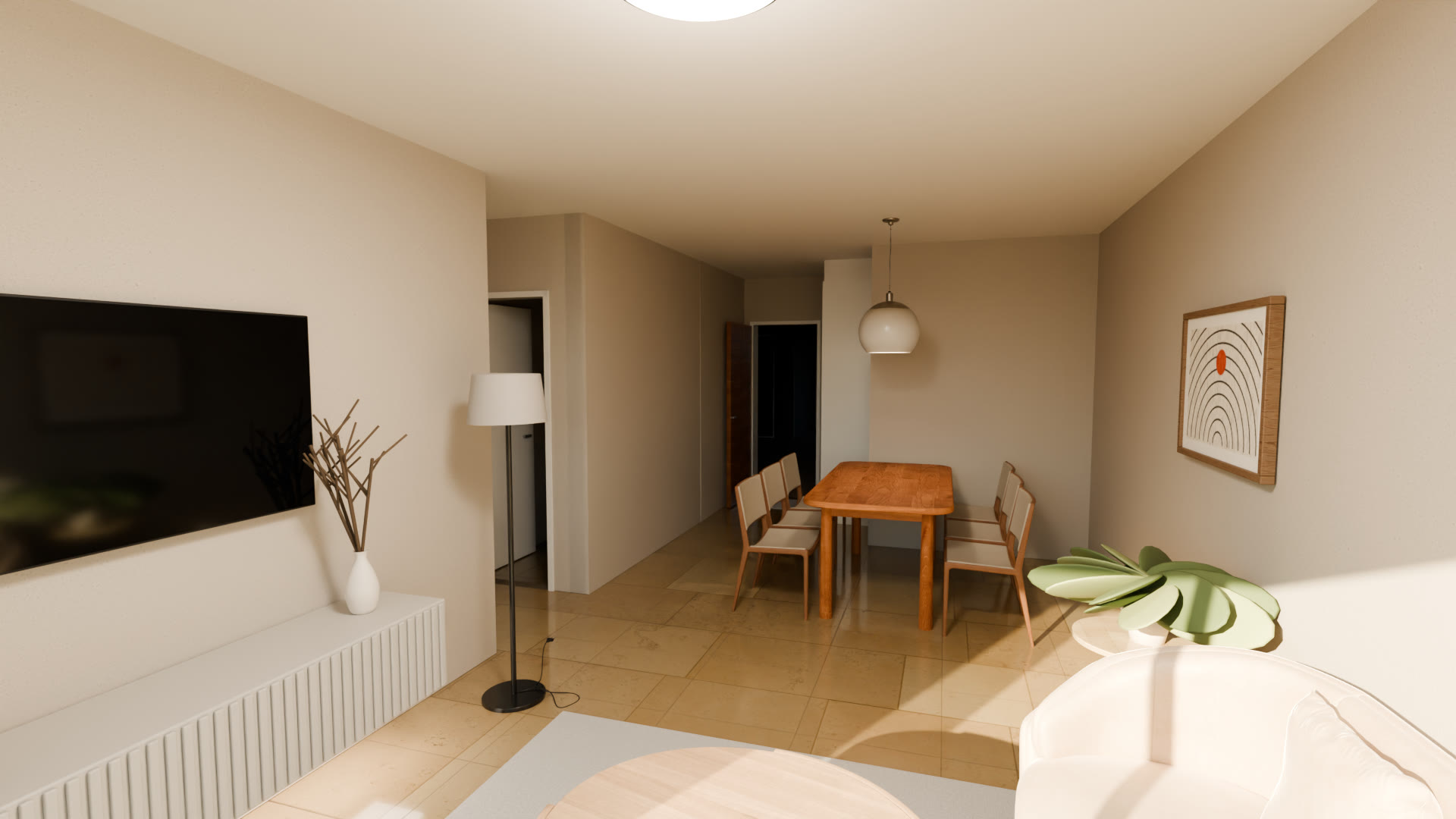
In the Maconda XXIV demo, an unofficial working demo based on a residential building in Quilmes, near Buenos Aires, you pick a floor and a unit and walk through it by scrolling on a phone. In a hotel, the same idea applies per room type: one walkthrough per type covers every floor where it repeats, which keeps costs reasonable even in large projects. See 3D virtual tours of apartments.
Show it honestly
Hotel renderings are tempting to exaggerate: a bigger room, a better view, a pool with nobody else around. But condo-hotel investors compare carefully, and guests will compare too, once the hotel opens and real photos replace the renderings. What appears in the image should match the plans and the spec sheet: the real room size, the view the room will actually have and the finishes that will be installed.
What do you need to send?
The plans of the building and each room type, the finish and furnishing specs if they're defined, photos of the site and its surroundings, and an idea of the hotel's category and the guest it's aimed at. You approve the views and the mood, and you get images ready for the investor presentation, the website and the sales brochure. The general list is in what you need to order a rendering.
If you're selling a hotel or condo-hotel project to investors, message me on WhatsApp at +54 9 11 6193-3176 or email facundocampo100@gmail.com. I work remotely from Buenos Aires (UTC−3) and answer in English and Spanish.
Frequently asked questions
What is a hotel rendering for?
It shows investors and future operators the rooms, lobby and shared areas before they're built. In a condo-hotel, it helps investors understand the product guests will book, which is what they're evaluating.
Which spaces should a condo-hotel rendering show?
The standard room and any other room types for sale, the lobby, the main shared areas like the pool or restaurant, and the building in its setting.
Do the renderings change with the destination?
Yes. A beach hotel, a mountain lodge and a business hotel sell different experiences, and the light, the mood and the details in the images should reflect that.
Do renderings help with investors who live far from the project?
Yes. For investors who won't visit the site, renderings and a walkthrough they can open on their phone are the main way to evaluate the project and share it with partners.