Brand
How to make a real estate project stand out in a crowded market
In short: When an area is full of similar projects, the difference isn't in the listing but in how easy it is for buyers to understand and explore yours. The one buyers understand best, without a visit and on their phone, is the one that makes the shortlist.
Making a real estate project stand out in a crowded market means getting buyers to understand it better and faster than the others. In a neighborhood with five pre-construction buildings full of one-bedrooms with amenities, the spec sheets look almost identical. What changes is which one buyers can explore, compare and share without any effort. That one makes the shortlist.
Why do so many projects look the same?
Open a listing site for any area with a lot of construction and you'll see nearly interchangeable listings: the same facade shot from street level, a generic living room, a technical floor plan, and copy that says "prime location," "amenities" and "high-end finishes." Buyers have no way to tell which is better, so they do the only thing they can: compare price per square foot.
That's the underlying problem. When everything looks the same, the project competes on price alone, and whoever cuts first gets the inquiry. Standing out is precisely how you get out of that comparison and give buyers other reasons to choose. On holding value, see holding the price per square foot and raising the average ticket.
What buyers look at when they compare
Before deciding what to show, put yourself in the buyer's shoes. The questions they ask, almost always in this order, are:
- Where is it, and what's the block like? An address isn't enough. They want to see the building with its neighbors, the trees, the corner.
- What's the unit I can afford like? Not the top-floor unit with the best view, but the one-bedroom on the third floor facing the back.
- What's it like to live in? Whether the bed fits, where the table goes, how much light it gets in the afternoon.
- What's still available? If the one they like is sold, they don't want to waste time.
- Is this developer serious? They infer that from how everything above is presented.
The project that answers those five questions before the buyer has to call is already a step ahead.
Show the real unit, not just the facade
Most projects put everything into one facade image and a couple of interiors of the showiest apartment. The buyer of the back-facing one-bedroom doesn't see themselves in any of those images.
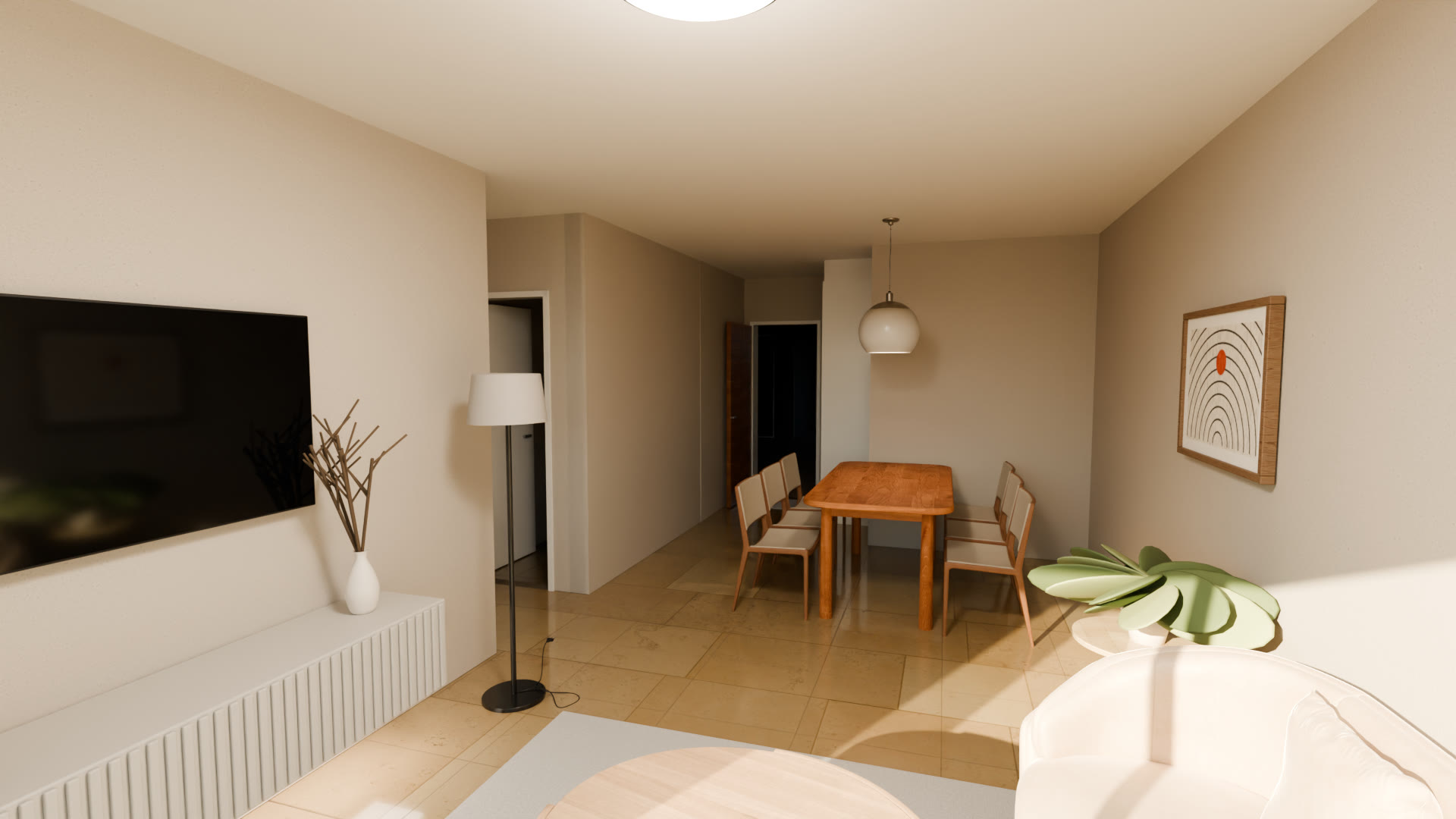
A concrete way to stand out is to show every unit type, furnished and with the project's finishes, and let buyers walk through it. You don't need a walkthrough for every apartment: one per unit type works for every floor where it repeats. A 40-unit building with 3 floor plans needs 3 walkthroughs, not 40, so the cost stays reasonable while buyers feel they're being shown "their" apartment. I go into this in 3D walkthroughs for condos and virtual staging.
The neighborhood as a selling point
In a crowded area, every project shares the same neighborhood, but not all of them show it. Seeing the building on its real block, with the houses and buildings next door, the sidewalk and the trees, does two things:
- Buyers recognize the place. If they live nearby, they spot the corner. If they don't, they get a concrete sense of where it is.
- It signals there's nothing to hide. A building floating on a generic background makes people suspect something is being left out.
It's an easy argument to make, and few projects make it. More in facade and exterior renderings.
The experience is the difference
There's one difference buyers feel even if they can't name it: how easy it was to get informed. Compare two paths for the same buyer:
- Project A: they see the ad, ask for information, get a heavy PDF, ask what's left, hear back the next day, ask for photos of the one-bedroom and are told to come to the sales office.
- Project B: they see the ad, tap a link, see the building on its block, tap a floor, see which units are available, swipe through the one they like and share it with their partner over WhatsApp.
Both projects might be equally good, but B got into the buyer's head first and gave them something to show at home. When that buyer writes, they already know what they want. You can try that experience in the Maconda XXIV building demo, an unofficial working demo based on that building in Quilmes, near Buenos Aires, marketed by Otamendi Propiedades. The floor and unit selector is explained in interactive unit selector.
Standing out on listing sites
On a listing site, standing out happens in seconds. A few choices that help:
- A cover image that reads well as a thumbnail and isn't the same generic facade everyone uses.
- Images of each floor plan, so every listing for the building shows the unit it's advertising.
- A link to the walkthrough in the description, as the next step for people who are already interested.
- Up-to-date availability, so you don't get inquiries that end in "that one's already sold."
More in renders and videos for social media and listing sites.
Stand out without exaggerating
When competition is tough, the temptation is to embellish: more greenery than there is, an open view that actually faces a blank party wall. That might bring one more inquiry, but it falls apart at the visit or, worse, at delivery. The kind of differentiation that lasts is the kind you can back up: showing the project as it will really be, presented better than the rest. That also builds the developer's brand for the next project.
If you have a project in a competitive area and want to see how it would look presented this way, send me a message on WhatsApp at +54 9 11 6193-3176 or email facundocampo100@gmail.com. I work remotely from Buenos Aires, answer in English or Spanish, and we can look at it together.
Frequently asked questions
How do I make my building stand out if nearby ones have similar amenities?
Change how it's presented, not just the spec sheet. Showing every unit type furnished, the building on its real block and up-to-date availability, all from one link on a phone, helps buyers understand your project sooner and better than the others.
Is cutting the price the only way to compete in a crowded market?
No. Projects compete on price when buyers have no other way to compare. If they can see and walk through the unit they're interested in, they also compare how it feels to live there, the light, the layout and how serious the developer is, and price stops being the only criterion.
Should I show every unit or just the best one?
Show every unit type. Buyers are looking for the one they can afford, which is almost never the showiest. One walkthrough per type covers every floor where that type repeats.
What if the area around the building isn't pretty?
Show it anyway, presented well. Buyers will see it at the visit regardless, and if they've already seen it, they show up without surprises. Hiding it breeds distrust and showings that go nowhere.