Sales & pre-construction
Sell to out-of-town buyers without making them travel
In short: A buyer who lives in another city can decide on a pre-construction purchase without traveling if they can see the building on its street, walk through the unit on their phone and talk to the salesperson over video call. The trip is for signing, not for understanding the project.
Out-of-town buyers can commit to a pre-construction home without a trip if they can see the building on its real street, walk through their unit on their phone and talk details through on a video call. The trip, if there is one, becomes the moment to sign, not the moment to figure out what they're buying.
Who buys from another city?
When people think of remote buyers, they usually picture foreign investors. But a lot of out-of-town demand is closer to home: people a few hours away, in the same country, with very ordinary reasons to buy where they don't live.
- People relocating for work, who need a home in a city they barely know.
- Parents buying for a child who's going to study or work in a bigger city.
- People going back to their hometown, or planning to retire near family.
- Buyers looking for a second home at the coast, the mountains or a lake town.
- Small investors who think a university city or a growing area is a good bet.
These buyers have different goals, but they share one problem: they can't drop by the sales office on a Saturday.
What holds them back?
The distance itself isn't the problem. What stops them is everything the distance hides:
- They don't know the neighborhood. Is it safe? Is it close to what they need? What's on the block?
- They can't picture the unit. A floor plan by email doesn't tell them how big the living room feels.
- They don't know the developer. A local buyer might have walked past one of their buildings. An out-of-town buyer has only the website.
- The trip costs time and money. Many will only make it once, if at all, and they'll want to see several projects in one visit.
A project that solves those doubts from a distance gets onto the short list. One that requires a visit to understand it often gets dropped before the trip is booked.
Show the block and the neighborhood
For someone who doesn't know the area, location is the first question and often the deciding one. A pin on a map tells them little.
What helps is showing the building on its actual street, with the neighboring buildings, the trees and the corner. An aerial rendering of the development adds the wider context: the park three blocks away, the main avenue, the station. For a parent buying for a child, seeing that the university is a short walk away can settle the decision.
Walk through the unit on their phone
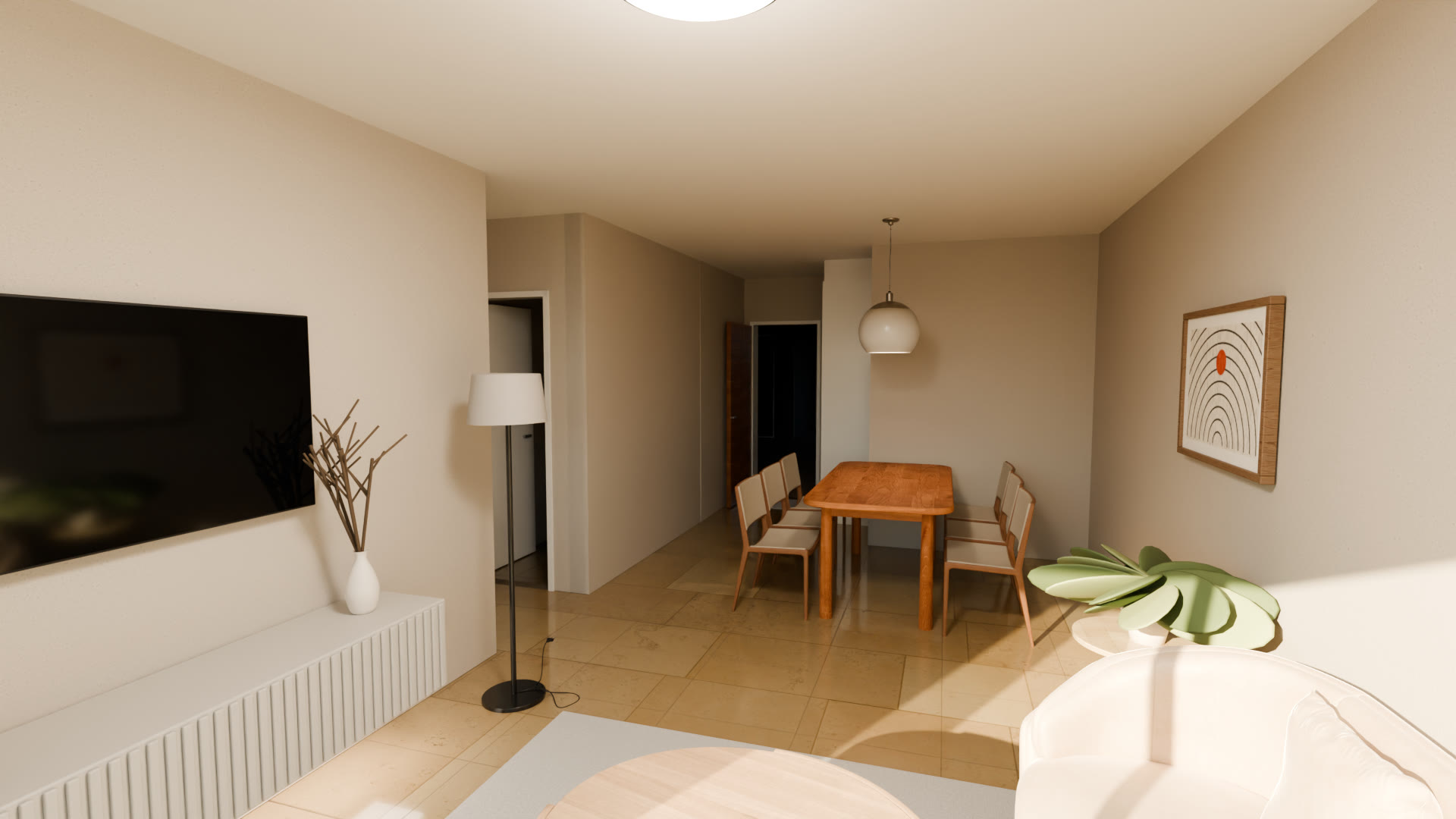
Once the location makes sense, the buyer wants to see the inside. A walkthrough of the unit, furnished and with the project's finishes, lets them move through it from their couch, hundreds of miles away.
It opens in the browser on any phone, with nothing to install. They can walk through it in the evening, show it to their partner, open it again the next day. In the Maconda XXIV building demo, an unofficial working demo, the buyer taps a floor, sees which units are available and walks through each apartment. It's the closest thing to a site visit without the trip. There's more on this in 3D walkthroughs on a phone.
The video call meeting
With an out-of-town buyer, the video call replaces the sales office meeting. It works best when both sides are looking at the same thing.
A simple structure:
- Start with the location. Share the aerial view and the street view, and answer neighborhood questions.
- Go to the floor and unit. Show availability and the unit they're interested in.
- Walk through it together. Stop where they have questions: the kitchen, the second bedroom, the view.
- Close with next steps. What they need to reserve, what documents, what the timeline is.
The full approach is in sales meetings over video call.
Following up from a distance
Out-of-town buyers often go quiet for a few days. They're comparing, talking to family, checking their budget. Follow-up matters more than usual.
Good follow-up sends something useful, not just "any news?": a reminder of the link, a progress photo from the site, an update if a unit they liked gets reserved. The walkthrough stays with them the whole time, so every follow-up message can point back to it.
Will the buyer travel anyway?
Some will, especially before signing, and that's fine. The difference is why they travel. Without good material, they travel to understand the project and may leave without deciding. With it, they arrive having already chosen the unit, and the trip is to confirm and sign.
Others won't travel at all. They'll reserve after the video call and come when it's time to take possession. The paperwork for buying remotely varies by country and region, so it's worth checking with a local professional.
This is close to what happens with remote investors and buyers, though domestic out-of-town buyers usually know the country, the language and the process, and mostly need to see the place.
How I work
I work the same way I'm suggesting you sell: remotely, from Buenos Aires, Argentina (UTC−3). You send plans and finish specs by email, we review over video call, and you get everything by link, ready to share or embed on your website.
If your project could sell to people who live in other cities, message me on WhatsApp at +54 9 11 6193-3176 or email facundocampo100@gmail.com. I answer in English and Spanish.
Frequently asked questions
Can a buyer reserve a pre-construction unit without visiting the site?
Many do, if they can clearly see the location, the unit and what's delivered. The legal and payment steps depend on the country, so the developer should explain them clearly and buyers should check with a local professional.
Does the 3D walkthrough work on any phone?
Yes. It opens in the browser on phones and computers, with nothing to install, and can be shared by WhatsApp, email or social media.
How do you show the neighborhood to someone who doesn't know it?
With the building shown on its real street and an aerial view that places it in the neighborhood, with nearby parks, avenues and services. That answers the location question better than a map pin.
Does this work for houses, not just apartments?
Yes. A house walkthrough lets the buyer move through each room with morning, afternoon and night light. See the Americana 35.64 house demo, an unofficial demo based on a model by Viviendas Roca.