Comparisons
Local or remote rendering studio: which is better for a developer
In short: A local rendering studio offers in-person meetings and firsthand knowledge of the area; a remote studio lets you choose by the work itself and get formats that may not exist near you. For most projects a site visit isn't needed: the address, photos of the lot and a video call are enough.
A local rendering studio gives you face-to-face meetings, someone who can walk the lot and a feel for the local market. A remote studio lets you choose by the results, from a much wider pool, and get formats that may not be available near you, like interactive 3D walkthroughs or a building view with an availability map. For most projects, the studio doesn't need to visit the site. What decides it is what you need to sell and who does it best.
What does a local studio offer?
Working with someone nearby has real advantages, and it's worth naming them:
- In-person meetings. For some developers, sitting down with the plans on the table is the most comfortable way to explain a project.
- They can see the site. Walking the block, seeing the neighbors and the corner helps them understand the surroundings.
- They know the local market. They know what furniture style local buyers respond to and what the other projects in the area look like.
- Same time zone, same habits. No thinking about when to call.
If there's a studio in your city that does the work you need, at the quality you need, it's a perfectly reasonable choice.
What does a remote studio offer?
Remote work widens the field. Instead of choosing among the studios nearby, you choose among everyone who does what you're looking for:
- You choose by the work. You look at the portfolio and the demos, and you pick whoever shows what you want for your project, even if they're in another city or another country.
- Formats that may not exist near you. Not every studio makes interactive 3D walkthroughs, building views with tappable floors or a unit selector. If nobody nearby offers them, going remote is how you get them.
- Organized communication. Everything's in writing: the plans you sent, the changes you asked for, what you approved.
- Delivery by link. What you receive is shared the same way you'll send it to your buyers.
I go deeper into this in working with a remote rendering studio.
Does the studio need to visit the site?
It's the most common question, and the answer is usually no. To show the building on its real block, the address, photos of the lot and the neighboring buildings, and the street-level imagery available on today's map apps are enough. If there's something specific, like a tree that stays, a view that matters or a blank side wall you'd rather downplay, a video call from the lot sorts it out.
What you do need, near or far, is for the developer to send complete information: plans, finishes, orientation and an idea of who they're selling to. It's all laid out in what you need to order a rendering.
What working remotely with me looks like
So this doesn't stay abstract, here's how it works with Recorrido 3D, which is a remote service:
- You send me the material by WhatsApp or email: plans, finishes, photos of the lot and whatever else you have on the project.
- We get on a video call so I understand the project, the buyer and the channels you'll sell through.
- You review progress by link from your phone or computer and mark what you want changed.
- You approve and receive the renderings and the walkthrough, ready to share over WhatsApp, embed on your website or post on listing sites.
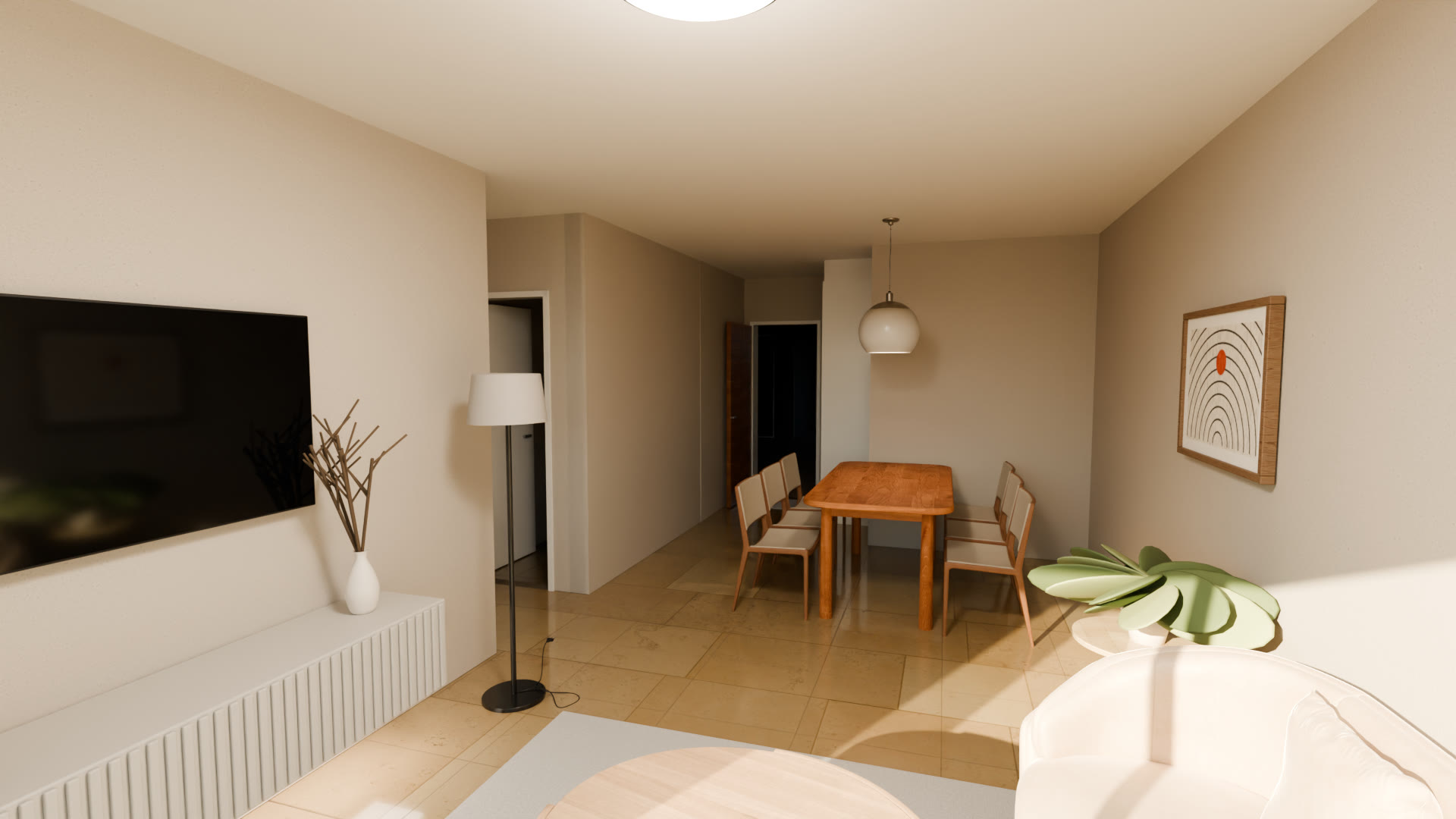
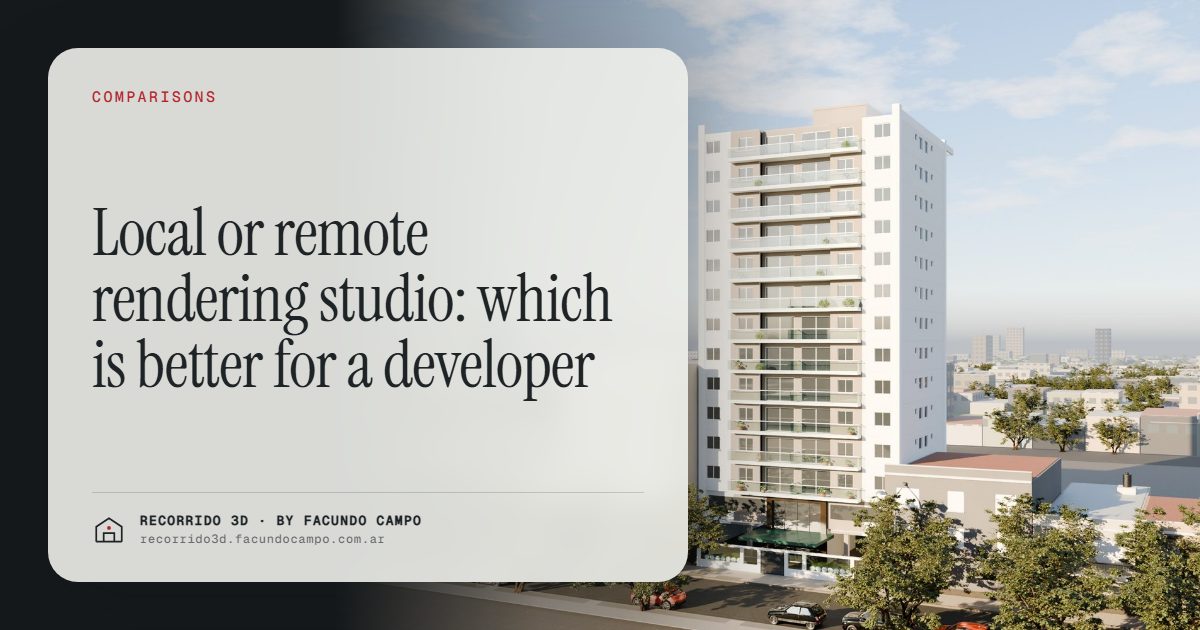
I work from Buenos Aires, Argentina, on Argentina time (UTC−3), which lines up well with business hours across the Americas and with afternoons in Europe. I work in English and Spanish. You can see the result in the Maconda XXIV building demo, an unofficial working demo based on a 12-story building in Quilmes, near Buenos Aires, marketed by Otamendi Propiedades.
What should you ask before choosing?
Local or remote, these questions help you decide with your eyes open:
- What exactly do I get? How many images, which rooms, whether there's a walkthrough, in what format and how it's shared.
- How faithful will it be to the project? Whether the material will show the real dimensions and the finishes in your spec sheet, or an idealized version that leads to complaints at handover.
- How do revisions work? How many rounds are included and how you request them.
- How is it quoted? Whether the price depends on the number of units or the number of unit types. A 40-unit building with 3 unit types needs 3 walkthroughs, not 40. See how much a rendering costs.
- Is there a demo I can try? Seeing the work running on your phone tells you more than any description. See what to look for in a 3D walkthrough demo.
For a fuller checklist, see how to choose a 3D rendering studio.
What if my company prefers to meet face to face?
That's a fair preference, and there are ways to get close to it. A video call with cameras on and the plans shared on screen feels a lot like a meeting at the office, with one advantage: both of you are looking at exactly the same thing at the same moment. And whatever you agree on ends up in writing.
If an in-person meeting still matters a lot to you, put it on the scale with everything else: what each studio offers, how well it shows your kind of project and whether it has the format your development needs to sell.
The decision, in short
Go local if there's a studio in your city that does what you need and meeting in person is central to how you work. Go remote if what you're after isn't nearby, if you want to choose by results from a wider pool, or if your buyers are also far away and the material has to travel anyway. If your buyers are investors in other cities or countries, there are more ideas in selling to remote investors and buyers.
If you have a project and want to see what working on it remotely would be like, message me on WhatsApp at +54 9 11 6193-3176 or email facundocampo100@gmail.com, and we'll go over it with your plans. I answer in English and Spanish.
Frequently asked questions
Does a remote studio need to visit the site?
Usually not. The address, photos of the lot and the neighboring buildings, plus a video call if there's something specific, are enough to show the building on its real block.
How do you approve progress remotely?
You review it by link from your phone or computer and request changes over WhatsApp or email. Everything stays in writing, which keeps the process organized.
What hours does Facundo work?
Argentina time (UTC−3), from Buenos Aires. Meetings are by video call, and day-to-day contact is over WhatsApp or email, in English or Spanish.
Doesn't a local studio know the market better?
It might, and that's a real advantage. Still, the developer is the one who knows their buyer best; if you explain that buyer to the studio, local or remote, the material can reflect it.