Comparisons
Renderings or photos of the finished building: which sells better
In short: Before construction, renderings are the only way to show the project; during construction, they work best next to progress photos; once the building is finished, photos prove it exists and renderings still sell empty units and the hard-to-photograph ones. The right mix depends on the stage and on the buyer's doubt.
Renderings or photos? It depends on where the project is and what the buyer is worried about. Off-plan, renderings are the only option, because there's nothing to photograph. During construction, the two work best together: renderings show where it's headed and progress photos show it's getting there. Once the building is finished, photos prove it's real, but renderings are still the better tool for empty units, awkward rooms and the units that take longer to sell.
What does each one show best?
Before choosing, be clear on what each format is good at.
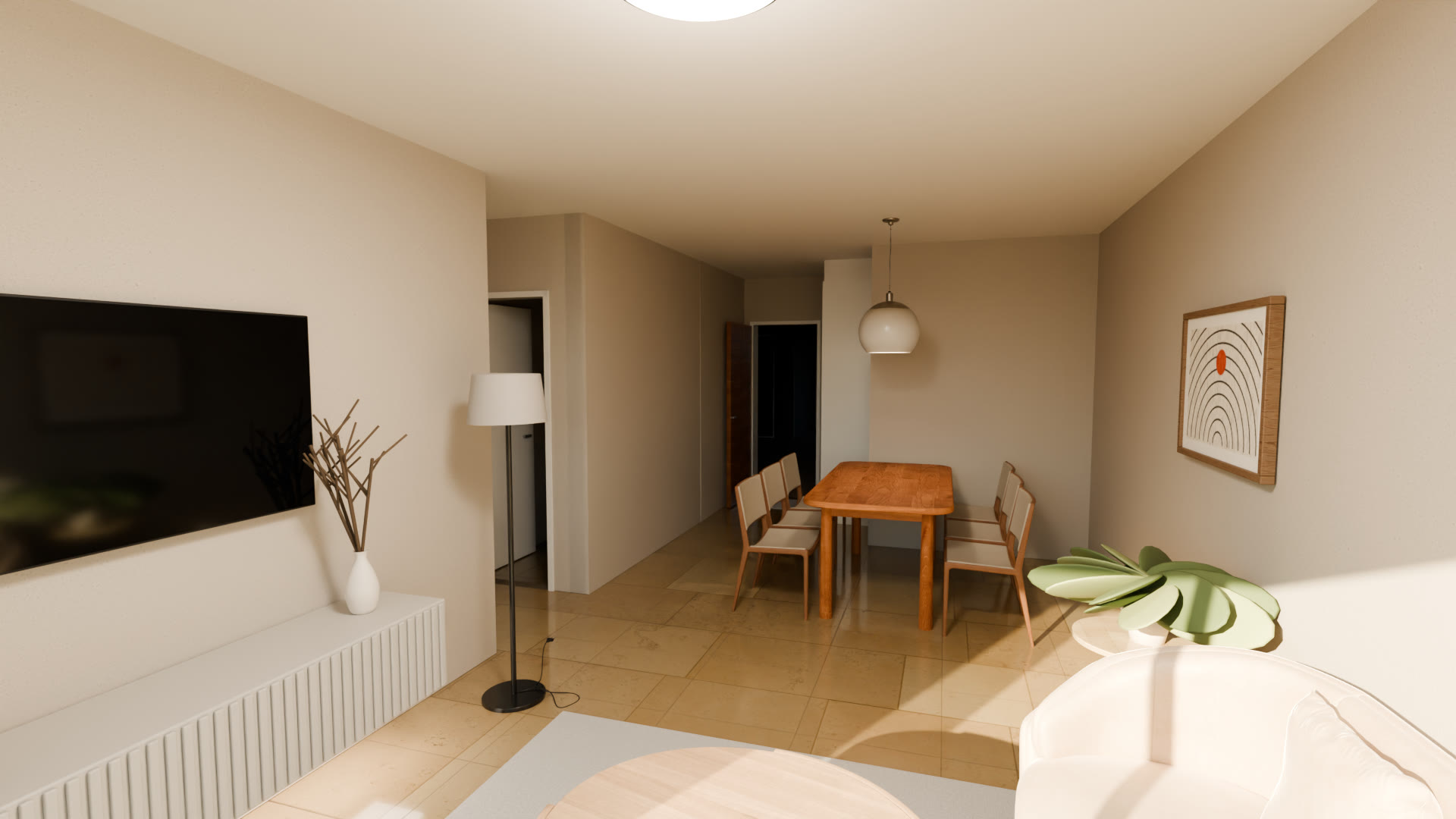
A rendering shows the project as it will be, built from the plans and the finishes you've specified. You can pick the time of day, furnish every room, set the building on its real street and show any unit type, built or not. Its weak spot: buyers know it's a generated image, and part of their brain wonders whether it'll really turn out like that.
A photo of the finished building shows what exists. It's proof. Nobody doubts the building is there. Its weak spot: it can only show what's in front of the camera. If the apartment is empty, it looks empty. If the day is overcast, it looks gray. If the neighbor has scaffolding up, it's in the shot.
Neither one wins in the abstract. The real question is what the buyer needs at each stage.
Off-plan: no contest
If the building doesn't exist, there's nothing to shoot. Your options are renderings, floor plans or photos of the developer's past projects. Hardly anyone reads floor plans well, and photos of other buildings show something else. Renderings are what make it possible to sell before you build.
The key here is that renderings stay true to what will be delivered: the real dimensions from the plans, the finishes in the spec sheet, the actual surroundings of the lot. A rendering that flatters too much creates a problem that shows up years later, at handover. More on that in 3D renderings for developers and builders.
During construction: each one helps the other
While the building goes up, you get something valuable: progress photos. They don't replace renderings, but they pair with them really well.
- The rendering shows the destination. What the facade, the living room and the balcony will look like.
- The progress photo shows the trip. The structure is rising, there are crews on site, the project is real.
For a hesitant buyer, that combination is persuasive: they see where it's going and that it's on its way. For the developer, every progress update is a natural reason to get back in touch with leads who went quiet. I go into that in construction progress and renderings.
Once it's finished: are photos enough?
This is where many developers decide they're done with renderings. Sometimes they're right. Often they aren't. There are specific situations where a rendering is still the better tool.
Empty units
A finished, empty apartment looks smaller and colder in a photo than it really is. White walls and bare floors don't help anyone picture daily life there. A rendering of that same unit, furnished, shows where the table, the sofa and the bed go. See virtual staging.
Rooms that don't photograph well
Some rooms are just hard to shoot: a small bathroom where the camera doesn't fit, a living room with a column that looks huge in the photo, a bedroom whose window blows out the whole frame. A rendering shows the room from the angle that explains it best.
The units that are slow to move
When the units left are the rear-facing ones or the low floors, a photo tends to show exactly what the buyer is afraid of: the blank wall next door, the missing view. A rendering can show what that unit has going for it, like the quiet, the afternoon light or the private patio, without hiding what it is. See selling rear-facing and low-floor units.
Shared spaces that aren't ready yet
Sometimes the building is done but the amenities aren't, or one unit is still being used for storage. A rendering shows the finished result without waiting.
What should lead the listing?
On a listing site or social media, the first image decides whether someone opens it or keeps scrolling. With the building finished, a good facade photo builds instant trust. But if the weather didn't cooperate on shoot day, or something on the block pulls the eye away, a facade rendering on the real street can work better as the lead image.
What matters is not mixing them without saying so. If a listing combines photos and renderings, buyers should know which is which. A simple caption like "artist's impression" or "illustrative image" is enough so nobody feels misled. More listing ideas in 3D walkthroughs on listing sites.
Where does a 3D walkthrough fit?
A 3D walkthrough adds something neither a photo nor a still rendering can: the ability to move through the unit. Off-plan, it's the clearest way for a buyer to understand the space. Once the building is finished, it lets someone who lives far away walk the furnished unit without traveling. You can see it in the house demo, an unofficial working demo based on the Americana 35.64 model by Viviendas Roca.
A simple way to decide
Ask yourself what stage you're at and what the buyer is unsure about:
- Off-plan, the doubt is "what will it look like?" Renderings and a walkthrough.
- Under construction, the doubt is "will they finish it?" Renderings plus progress photos.
- Finished, the doubt is "what's it like to live here?" Photos to prove it exists, renderings to show the units furnished and to help the ones that are slow to sell.
At every stage, the material should honestly show what's being delivered. That's the difference between selling well and selling yourself problems for later.
I work remotely from Buenos Aires, Argentina (UTC−3), with deliveries by link. If you have a project at any of these stages and want to know which material makes sense, message me on WhatsApp at +54 9 11 6193-3176 or email facundocampo100@gmail.com and we'll look at it with your plans. I answer in English and Spanish.
Frequently asked questions
Are renderings still useful once the building is finished?
Yes, especially for showing empty units furnished, rooms that are hard to photograph and units that take longer to sell. Photos prove the building exists; renderings help buyers picture living there.
Should I label an image as a rendering?
It's a good idea. A caption like "illustrative image" avoids misunderstandings and protects the buyer's trust, especially when a listing mixes real photos and renderings.
What works best as the lead image of a listing?
A facade shot on the real street. If the building is finished, that can be a good photo; if it isn't built yet, or the photo doesn't do it justice, a rendering.
Can I use renderings of a unit type I've already photographed?
Yes. It often pays to have both: the photo as proof and the furnished rendering so people understand how the space works.